
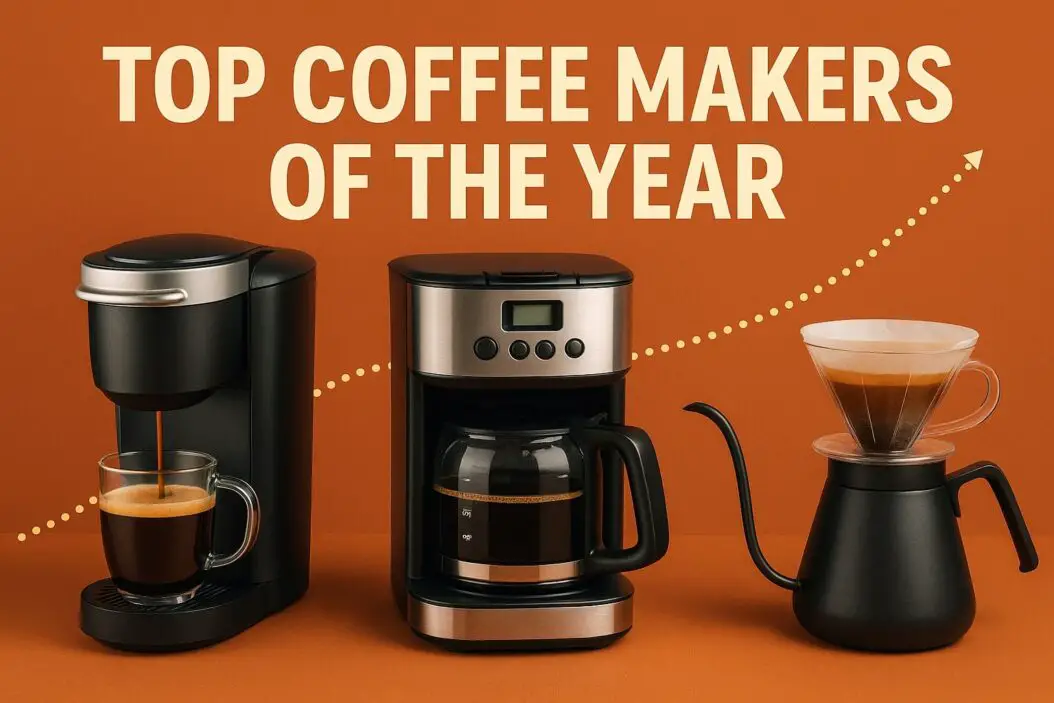
The best top coffee makers of 2026 fall into five main categories: automatic drip machines, espresso makers, single-serve brewers, manual pour-overs, and dual-function systems. Each solves a different coffee problem. The right choice depends on how much coffee you drink daily, how much time you want to spend brewing, and your budget.
Most people can brew excellent coffee for under $100. Spending more gets you durability, control, or convenience, not necessarily better taste. This guide helps you skip the marketing hype and find the machine that actually fits your life.
What Changed in Coffee Maker Technology This Year
Coffee maker design hasn’t reinvented itself, but 2026 brought meaningful improvements. Temperature precision got better. Grinders became more integrated. Touch controls now include smartphone app connectivity on premium models. Water distribution systems are more even, preventing hot spots in the brew basket.
The biggest shift: manufacturers focused on consistency over gimmicks. Fewer machines tried to do everything. More machines perfected one job. That’s better for you.
One practical change worth noting: most machines now heat water faster. Brew times dropped from 10 minutes to 6-8 minutes on quality drip machines. If you’re rushing in the morning, this matters.
Drip Coffee Makers: The Reliable Workhorse
Drip machines remain the most popular choice. They’re simple. They work. They don’t require skill.
What Makes a Great Drip Machine
The critical factor is brew temperature. Between 195 and 205 degrees Fahrenheit is the sweet spot. Below that, your coffee tastes weak and sour. Above it, you get bitter, burned coffee. Most cheap machines fail here. They either run too cool or too hot.
Water distribution matters too. The water should spread evenly across the grounds. When it doesn’t, some grounds get saturated and over-extract while others stay dry. This creates uneven flavor.
Consistency is everything. A drip machine worth buying produces the same quality cup every single time. Not sometimes. Every time.
The Technivorm Moccamaster: The Gold Standard
Price: $300-350 | Brew capacity: 1-10 cups | Brewing time: 6 minutes
The Moccamaster is the most certified drip machine in the world. The Specialty Coffee Association endorses it. For good reason.
It maintains precise temperature control during the entire brew cycle. The water gets distributed through a shower head that mimics pour-over technique. The glass carafe sits on a heating plate that keeps coffee warm without overcooking it.
Who should buy this: Anyone who drinks 2-10 cups daily and wants the best-tasting drip coffee consistently. People upgrading from $30 machines notice an immediate difference.
Why it costs more: Precision engineering. The internals use multiple heating elements. The brewing basket has precise hole spacing. The thermal design took years to perfect. It’s one of the few machines that actually delivers on “perfection.”
Related resources: The Moccamaster is certified by the Specialty Coffee Association for its ability to produce the perfect cup.
Alternative Drip Option: OXO Brew
Price: $150-200 | Brew capacity: 8-12 cups | Brewing time: 6-11 minutes
OXO machines prioritize ease over precision. The interface is simpler. Auto-brew lets you set it the night before. The thermal carafe keeps coffee hot for hours.
It doesn’t have the precise temperature control of the Moccamaster, but it consistently delivers good coffee. The 9-cup model brews faster than most competitors. The 12-cup option handles family gatherings without fuss.
Who should buy this: Busy households wanting reliable morning coffee without learning curves. People with medium budgets who want modern convenience features.
Espresso Machines: Semiautomatics vs Fully Automatics
Espresso intimidates people. It shouldn’t. The machine does 90% of the work. You handle 10%. Start there.
The De’Longhi La Specialista Opera: The Balanced Choice
Price: $450-550 | Pressure: 9 bars | Milk steam: Manual wand
This machine sits between beginner-friendly and serious. It guides you without taking over completely.
Built-in burr grinder. Temperature management. Pressure-assisted tamping. These features help you make espresso taste good from day one without removing the hands-on experience.
The steam wand lets you practice milk frothing. You’ll learn proper technique instead of relying on a button.
Real users report rich, smooth espresso with balanced flavor. The five preset drinks (including cold brew) cover most mornings. You can adjust everything if you want to experiment.
Who should buy this: Home baristas who want café-quality espresso without café prices. People comfortable tweaking settings but appreciating assistance.
Premium Option: Breville Barista Express Impress
Price: $750 | Grinder: Built-in conical burr | Control: Pressure-assisted
This machine includes every feature: integrated grinder, precise temperature control, pressure-assisted tamping, manual steam wand. It covers the entire workflow from bean to cup.
The learning curve exists but the machine guides you through it. First-time users create drinkable espresso immediately. Long-term users discover detailed control for refinement.
Who should buy this: People serious about espresso at home. Those upgrading from budget machines. Anyone wanting a complete package.
Single-Serve Pod Machines: When Convenience Wins
Pod machines solve one problem perfectly: quick coffee with no cleanup. They introduce another problem: cost per cup and plastic waste. Accept both before buying.
The Bruvi BV-01: Best Pod System
Price: $200-250 | Pod types: Proprietary | App: Yes
Bruvi differs from Keurig in brew quality and customization. The touchscreen lets you choose eight sizes. You adjust temperature and extraction for personal preference.
The smartphone app enables remote brewing. Schedule coffee to be ready when you wake up. Adjust settings from bed.
Pod quality matters here. Bruvi pods brew noticeably better than Keurig pods. The taste difference is real. Environmental cost remains (pods still exist) but the biodegradable option reduces guilt.
Who should buy this: Single professionals, people with irregular schedules, anyone valuing convenience over environmentalism.
Budget Pod Option: Nespresso Vertuo Next
Price: $150 | Pod types: Proprietary | Sizes: Espresso to 18 oz
Vertuo recognizes pod barcodes and adjusts brewing automatically. You get the right extraction for each drink size without thinking about it.
The machine is compact. Storage footprint is minimal. One-button operation. It just works.
Who should buy this: Apartment dwellers, minimalist kitchen folks, anyone wanting pod convenience without spending extra.
Manual Methods: For Control Enthusiasts
Some people enjoy the ritual. The hands-on process matters as much as the coffee.
Pour-Over: The Melitta or Chemex
Price: $10-50 | Learning curve: Moderate | Control: Absolute
Pour-overs aren’t “machines” exactly, but they’re the manual opposite of automation.
You control water temperature, pour rate, bloom time, and extraction completely. This precision produces excellent coffee. It also requires focus and consistency.
Melitta (ceramic or glass) costs $10-20 and works perfectly. Chemex costs more but the visual presentation is part of the experience.
Learning takes two weeks. After that, you’ll make better coffee than most machines because you’re actually paying attention.
Who should buy this: Morning ritualists, remote workers with time, coffee enthusiasts who enjoy the process.
Dual-Function Systems: Two Styles in One
Some households have multiple coffee drinkers with different preferences. Dual machines brew both espresso and drip, or espresso and single-serve.
The Ninja Prestige DualBrew
Price: $300-350 | Functions: Espresso and drip
Brew espresso into a cup or into the carafe for regular coffee. The same machine handles both styles.
Flip a switch. Change modes. Use the integrated milk frother for lattes.
It’s not the best espresso machine and not the best drip machine. It’s the best compromise machine.
Who should buy this: Couples with different coffee tastes. Offices needing multiple drink types. Anyone with limited counter space wanting variety.
Quick Comparison Table
| Machine | Type | Price | Best For | Brew Time |
|---|---|---|---|---|
| Moccamaster KBT | Drip | $300 | Coffee enthusiasts | 6 min |
| OXO Brew 9-Cup | Drip | $150 | Busy households | 6 min |
| De’Longhi La Specialista Opera | Espresso | $500 | Home baristas | 2 min |
| Bruvi BV-01 | Pod | $225 | Convenience seekers | 3 min |
| Nespresso Vertuo | Pod | $150 | Budget pod users | 2 min |
| Ninja Prestige DualBrew | Dual | $325 | Multi-preference homes | 6-8 min |
| Chemex | Manual | $40 | Process enthusiasts | 5 min |
How to Actually Choose Your Machine
Ask yourself three questions in order.
How much coffee do you drink per day?
One to two cups: Single-serve pod machine or small pour-over.
Three to eight cups: Drip machine or manual pour-over.
Nine-plus cups: Large drip machine or commercial option.
Question 2: How much time do you have?
Fifteen seconds to one minute: Pod machine.
Five to ten minutes: Drip or espresso machine.
Ten-plus minutes: Manual methods like pour-over or Moka pot.
Question 3: What’s your budget, realistically?
Under $75: OXO, Bonavita, or manual pour-over.
$75-$200: Most quality drip machines, budget espresso, pod machines.
$200-$500: Quality espresso machines, premium drip, dual systems.
$500-plus: Ultra-premium espresso setups or commercial-grade machines.
Your answer determines the category. Then pick the model within that category based on reviews and features.
Maintenance Matters
All machines need regular cleaning. Descaling removes mineral buildup. How often depends on your water hardness.
Hard water areas: Every 30-60 brews.
Soft water areas: Every 100-150 brews.
Espresso machines need purging (running water through the group head) before each shot. Milk-frothing wands need immediate cleaning after use. Dried milk bakes on and becomes nearly impossible to remove.
Drip machines need a good rinse after each use. The filter basket collects old grounds and residual oils that taste stale.
Pods generate waste. Single-serve = single-use waste. This is environmental math you need to accept.
Common Buying Mistakes to Avoid
Mistake 1: Assuming expensive equals better taste.
A $600 espresso machine won’t automatically make better coffee than a $300 machine if you can’t use it properly. The difference is features and durability, not flavor ceiling.
Mistake 2: Buying for features you’ll never use.
Programmable timers only help if you actually use them. Milk frothers only matter if you drink milk-based drinks. Assess your actual habits, not your imagined weekend chef self.
Mistake 3: Ignoring water quality.
A great machine with hard tap water produces mediocre coffee. Filtered or bottled water improves results dramatically. This costs less than upgrading machines.
Mistake 4: Not considering counter space.
Measure before you buy. A beautiful machine gathering dust in a box doesn’t make coffee.
FAQ
Is a grinder necessary?
Built-in grinders are convenient but low-quality. Separate burr grinders produce better results. For casual drip coffee, it matters less. For espresso, grind quality directly affects taste. Budget for a decent grinder if you’re buying espresso equipment.
How long do coffee makers typically last?
Cheap machines ($20-50): 2-4 years. Mid-range machines ($100-300): 5-8 years. Quality machines like Moccamaster ($300+): 10-20 years. Durability justifies higher initial cost for daily users.
Can I use any coffee for any machine?
Not really. Espresso needs fine, consistent grind. Drip works with medium grinds. Pour-over needs medium-fine. Coarse grinds work for French press and cold brew. Grind size matters. Pre-ground coffee is already chosen for drip machines, so you’re limited to whatever grind size they use.
Why does my coffee taste bitter?
Brewing too hot, grinding too fine, or letting coffee sit on a hot plate too long all cause bitterness. Try water at 200 degrees Fahrenheit exactly. Use medium grind. Move coffee to a thermal carafe instead of leaving it on the hot plate.
Is cold brew worth the effort?
Cold brew takes 12-24 hours but produces smooth, shelf-stable concentrate. You add hot water or milk to dilute. If you drink cold coffee regularly, it saves money and tastes better than most machines. If you rarely drink cold coffee, skip it.
Final Thoughts
The best coffee maker is the one you’ll actually use every day. Buying the most expensive machine and hating the learning curve defeats the purpose. Buying too cheap and suffering through weak, bitter coffee every morning wastes money on beans.
Match the machine to your life. A Moccamaster for someone who drinks one cup and hates morning routine is overkill. A pod machine for a coffee obsessive is frustration waiting to happen.
Test when possible. Visit friends or coffee shops with machines you’re considering. Spend five minutes with it before spending hundreds on it.
Your morning coffee ritual shapes your day. The machine that supports your actual habits wins. Everything else is marketing.

- How to Improve Wi-Fi Signal on My Phone (2026 Guide) - March 17, 2026
- How to Enable MMS Messaging on iPhone (2026 Guide) - March 15, 2026
- 9 Best Software for Web Development in 2026 - March 15, 2026