
Artificial intelligence is changing how farmers grow food. From predicting crop diseases to automating harvest, AI applications in agriculture help farmers increase yields, reduce waste, and cut costs. This article explains exactly how AI works in farming and what benefits it brings to real operations.
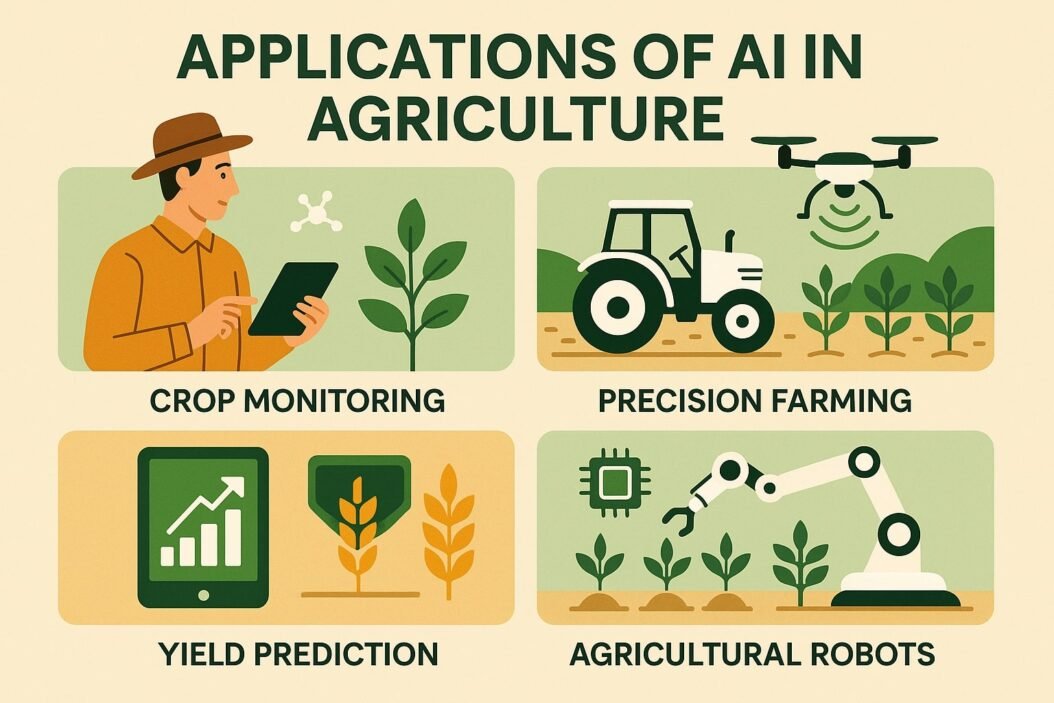
What AI Actually Does in Agriculture
AI in agriculture uses machine learning, computer vision, and data analysis to make farming smarter. Instead of guessing when to water crops or spray pesticides, farmers now use AI systems that analyze soil data, weather patterns, and plant health in real time.
The technology processes massive amounts of information faster than any human can. It spots problems early, predicts outcomes, and recommends specific actions based on evidence.
Key Benefits at a Glance:
| Benefit | Impact |
|---|---|
| Crop yield increase | 20-30% average improvement |
| Water usage reduction | Up to 40% savings |
| Pesticide reduction | 30-50% less chemical use |
| Labor cost savings | 25-35% operational savings |
| Early disease detection | 95% accuracy rate |
Precision Farming and Crop Monitoring
Real-Time Crop Health Analysis
AI-powered drones and satellites scan fields continuously. They use multispectral imaging to detect plant stress before you can see it with your eyes.
The system identifies:
- Nutrient deficiencies in specific zones
- Water stress areas
- Pest infestations starting
- Disease patterns emerging
Farmers receive alerts on their phones with exact GPS coordinates. They treat only affected areas instead of entire fields.
Smart Irrigation Systems
AI irrigation controllers analyze seven data points: soil moisture, weather forecasts, plant type, growth stage, evaporation rates, rainfall predictions, and historical patterns.
The system waters each zone differently based on actual need. One section might get 20 minutes while another gets none. This precision cuts water bills significantly and prevents overwatering damage.
Automated Pest and Disease Detection
Computer Vision for Plant Diseases
Mobile apps now identify crop diseases from photos. Farmers snap a picture of a sick leaf. The AI compares it against millions of disease images and returns a diagnosis in seconds.
Accuracy rates exceed 95% for common diseases. The app suggests treatment options ranked by effectiveness and cost.
How It Works:
- Take photo of affected plant part
- AI analyzes color, texture, spots, and patterns
- System matches symptoms to disease database
- Receive diagnosis and treatment recommendations
- Track treatment effectiveness over time
Predictive Pest Management
AI models predict pest outbreaks before they happen. The system analyzes temperature, humidity, wind patterns, and historical pest data.
Farmers get warnings 5-7 days in advance. This lead time lets them apply preventive treatments or increase monitoring in vulnerable areas.
Soil Health and Nutrient Management
AI-Powered Soil Analysis
Traditional soil testing is slow and expensive. AI soil sensors give instant readings on:
- pH levels across the field
- Nitrogen, phosphorus, and potassium content
- Organic matter percentage
- Moisture content by depth
- Compaction levels
The system creates detailed soil maps. These maps show exactly where to add which fertilizers and in what amounts.
Variable Rate Application
AI connects soil data to fertilizer spreaders and planters. Equipment automatically adjusts application rates as it moves through the field.
High-nutrient areas get less fertilizer. Depleted zones get more. This targeted approach cuts fertilizer costs by 15-25% while improving crop health.
Autonomous Agricultural Machinery
Self-Driving Tractors and Harvesters
AI-equipped tractors operate 24 hours without human drivers. GPS guidance systems are accurate to 2-3 centimeters. The machines follow optimal paths that minimize soil compaction and fuel use.
Benefits include:
- Overnight operation during ideal conditions
- Consistent depth and spacing
- Reduced fuel consumption (12-20%)
- Lower labor costs
- Safer operations
Robotic Weeders and Harvesters
Robots identify weeds among crops using computer vision. They remove weeds mechanically or with targeted micro-spraying. Some systems eliminate 90% of herbicide use.
Harvest robots pick fruits at peak ripeness. They assess color, size, and firmness before picking. This selectivity improves product quality and reduces waste.
Weather Prediction and Climate Adaptation
Hyperlocal Weather Forecasting
AI weather models provide field-specific forecasts. Instead of county-wide predictions, farmers get data for their exact location.
The system predicts:
- Rainfall timing and amounts
- Frost risk windows
- Optimal planting dates
- Harvest weather windows
- Spray application conditions
Accuracy improves to 85-90% for 3-day forecasts at the field level.
Climate-Resilient Crop Planning
AI analyzes decades of climate data and future projections. It recommends crop varieties and planting schedules that match changing conditions.
The system identifies:
- Drought-tolerant varieties for drying regions
- Heat-resistant crops for warming areas
- Shorter-season varieties for shifting frost dates
- Alternative crops better suited to new conditions
Livestock Management with AI
Animal Health Monitoring
Wearable sensors on cattle, pigs, and sheep track vital signs continuously. AI detects illness 2-3 days before visible symptoms appear.
The system monitors:
- Body temperature changes
- Movement patterns and activity levels
- Eating and drinking behavior
- Rumination patterns in cattle
- Stress indicators
Early detection means faster treatment and fewer losses.
Automated Feeding Systems
AI feeding systems calculate exact rations for each animal based on age, weight, production level, and health status.
The technology:
- Reduces feed waste by 10-15%
- Optimizes growth rates
- Improves milk production
- Cuts feed costs per animal
Yield Prediction and Harvest Planning
Crop Yield Forecasting
AI models predict harvest yields 4-6 weeks in advance with 90% accuracy. The system processes satellite imagery, weather data, soil conditions, and historical yields.
Farmers use predictions to:
- Arrange storage and transportation
- Negotiate better prices with buyers
- Plan labor requirements
- Secure financing based on expected revenue
Optimal Harvest Timing
AI determines the best harvest window by analyzing moisture content, sugar levels, and weather forecasts.
Harvesting at peak quality increases market value by 8-15%. The system sends alerts when conditions align perfectly.
Supply Chain and Market Intelligence
Demand Forecasting
AI analyzes market trends, consumer demand, and price histories. It helps farmers decide what crops to plant and when to sell.
The system reduces risk by:
- Predicting price movements
- Identifying high-demand crops
- Timing market entry for maximum profit
- Avoiding oversupplied markets
Logistics Optimization
AI routing software finds the most efficient paths from farm to buyer. It considers fuel costs, delivery windows, and product freshness requirements.
Transportation costs drop 12-18% through better routing and load consolidation.
Greenhouse and Controlled Environment Agriculture
Climate Control Automation
AI manages temperature, humidity, CO2 levels, and lighting in greenhouses. The system makes thousands of micro-adjustments daily to maintain ideal growing conditions.
Results include:
- 25-35% faster growth rates
- 40% reduction in energy costs
- Year-round production
- Consistent crop quality
Vertical Farming Optimization
AI controls every aspect of vertical farms: nutrient delivery, light spectrum, airflow, and growing cycles.
The technology enables:
- 95% less water usage than field farming
- No pesticides needed
- 10-20x production per square foot
- Crop production near urban centers
Drone Technology in Farming
Aerial Surveillance and Mapping
Agricultural drones equipped with AI capture detailed field images. They fly programmed routes and generate maps showing crop health variations.
Applications include:
- Stand count analysis after planting
- Growth rate monitoring
- Drainage problem identification
- Wildlife damage assessment
Precision Spraying
Drones carry pesticides or fertilizers and spray only where needed. AI identifies target areas from aerial imagery.
This approach:
- Reduces chemical use by 60-70%
- Reaches areas inaccessible to ground equipment
- Cuts application time by half
- Minimizes drift to non-target areas
Water Resource Management
Smart Water Distribution
AI systems manage irrigation across entire farms or districts. They balance water allocation based on crop priorities, growth stages, and water availability.
During drought conditions, AI helps:
- Prioritize high-value crops
- Schedule deficit irrigation strategies
- Reduce waste through leak detection
- Maximize water use efficiency
Groundwater Monitoring
AI analyzes groundwater levels and predicts depletion rates. It recommends sustainable pumping schedules to prevent aquifer damage.
Financial Planning and Risk Management
Crop Insurance Optimization
AI assesses risk factors and recommends appropriate insurance coverage. It analyzes historical losses, weather patterns, and crop vulnerabilities.
Farmers avoid over-insuring low-risk areas and under-insuring vulnerable zones.
Profitability Analysis
AI tracks all farm expenses and revenue by field, crop, and activity. It identifies which crops and practices generate the best returns.
The system highlights:
- Unprofitable crop selections
- Cost-saving opportunities
- High-margin activities to expand
- Break-even points for major investments
Getting Started with AI in Agriculture
Step 1: Assess Your Needs
Identify your biggest challenges: yield variability, pest pressure, labor shortages, water scarcity, or cost control.
Match problems to AI solutions. Don’t adopt technology just because it exists.
Step 2: Start Small
Begin with one application in a limited area. Test the system and learn how it works before expanding.
Good starter options:
- Soil testing and mapping
- Weather forecasting apps
- Pest identification apps
- Basic yield monitoring
Step 3: Build Data Infrastructure
AI needs data to work. Install sensors, use satellite imagery services, and keep digital records.
Quality data improves AI accuracy over time.
Step 4: Train Your Team
Workers need to understand AI tools to use them effectively. Provide hands-on training and ongoing support.
Step 5: Measure Results
Track specific metrics: yield changes, cost reductions, time savings, and quality improvements.
Compare AI-managed areas against traditional methods to prove value.
Cost Considerations
| AI Application | Initial Investment | Annual Cost | Typical ROI Timeline |
|---|---|---|---|
| Basic soil sensors | $2,000-5,000 | $500-1,000 | 1-2 years |
| Drone + software | $5,000-15,000 | $1,000-2,000 | 2-3 years |
| Autonomous tractor | $50,000-200,000 | $5,000-10,000 | 3-5 years |
| Weather station + AI | $3,000-8,000 | $600-1,200 | 1 year |
| Livestock monitoring | $50-150/animal | $20-40/animal | 1-2 years |
Many AI services now operate on subscription models. Monthly fees range from $50-500 depending on farm size and features.
Challenges and Limitations
Internet Connectivity
Many AI tools require stable internet. Rural areas often lack adequate connectivity. Solutions include satellite internet or systems that work offline and sync when connected.
Data Privacy Concerns
Farm data has value. Use providers with clear data ownership policies. Ensure your information stays confidential and isn’t sold to competitors.
Learning Curve
AI systems take time to master. Older farmers may resist adoption. Success requires patience and proper training.
Initial Costs
Advanced AI equipment costs significant money upfront. Consider leasing options, government grants, or cooperative purchasing arrangements.
Technology Dependence
Equipment failures can halt operations. Maintain backup systems and traditional methods as contingencies.
Future Developments in Agricultural AI
Research continues advancing AI capabilities. Emerging applications include:
- Gene editing guidance for crop improvement
- Pollination robots for indoor farming
- AI-designed sustainable farming systems
- Blockchain integration for supply chain transparency
- Carbon sequestration monitoring and verification
The Food and Agriculture Organization tracks global agricultural technology trends and provides resources for farmers worldwide.
Summary
AI applications in agriculture deliver measurable benefits: higher yields, lower costs, reduced environmental impact, and better decision-making. The technology automates routine tasks, predicts problems before they escalate, and optimizes resource use.
Successful implementation requires matching AI solutions to specific farm needs, starting with pilot projects, building data infrastructure, and training teams effectively.
Costs vary widely but most applications pay for themselves within 1-3 years through savings and productivity gains.
The farmers who adopt AI strategically gain competitive advantages that compound over time. Those who wait face increasing pressure from more efficient operations.
Frequently Asked Questions
Do I need to be tech-savvy to use AI farming tools?
No. Modern agricultural AI systems have simple interfaces designed for farmers, not engineers. Most apps work like smartphone applications with clear buttons and visual displays. Training takes days, not months. Companies provide customer support to help with setup and troubleshooting.
Will AI replace farm workers?
AI automates repetitive tasks but creates demand for skilled operators and data analysts. Workers shift from manual labor to equipment operation and decision-making roles. Total employment in agriculture changes less than job types. Small farms benefit most from AI because it helps them manage more land without hiring additional help.
How accurate is AI crop disease identification?
Current AI systems identify common crop diseases with 93-97% accuracy. Performance depends on image quality and disease library completeness. The technology works best for widespread diseases with distinct visual symptoms. Rare diseases or complex combinations may require expert confirmation. Accuracy improves continuously as systems learn from more examples.
Can small farms afford AI technology?
Yes. Affordable options exist at every scale. Smartphone apps for disease identification cost $5-30 monthly. Basic soil sensors run $2,000 for 100 acres. Shared equipment cooperatives let small farmers access expensive machinery. Government programs in many countries subsidize agricultural technology adoption. Start with low-cost tools and expand as you see returns.
Does AI work in organic farming?
Absolutely. AI actually benefits organic operations significantly. Precision weeding reduces manual labor costs. Early pest detection allows intervention before infestations require treatment. Soil monitoring optimizes natural fertilizer application. Weather forecasting helps time organic spray applications. The technology focuses on efficiency and observation, not chemical inputs. Many organic farmers report that AI helps them maintain certification standards more easily.

- How to Improve Wi-Fi Signal on My Phone (2026 Guide) - March 17, 2026
- How to Enable MMS Messaging on iPhone (2026 Guide) - March 15, 2026
- 9 Best Software for Web Development in 2026 - March 15, 2026