
Cancer research is moving faster than ever. In 2025 and 2026, scientists approved over 50 new oncology drugs, including 11 first-in-class treatments that work in entirely new ways. Some patients with previously untreatable cancers are now walking away cancer-free. Others are living longer with better quality of life. These aren’t theoretical wins—they’re happening in hospitals and clinics today.
This article breaks down the actual advancements transforming cancer care, explains what they mean for patients, and shows you where the field is headed.
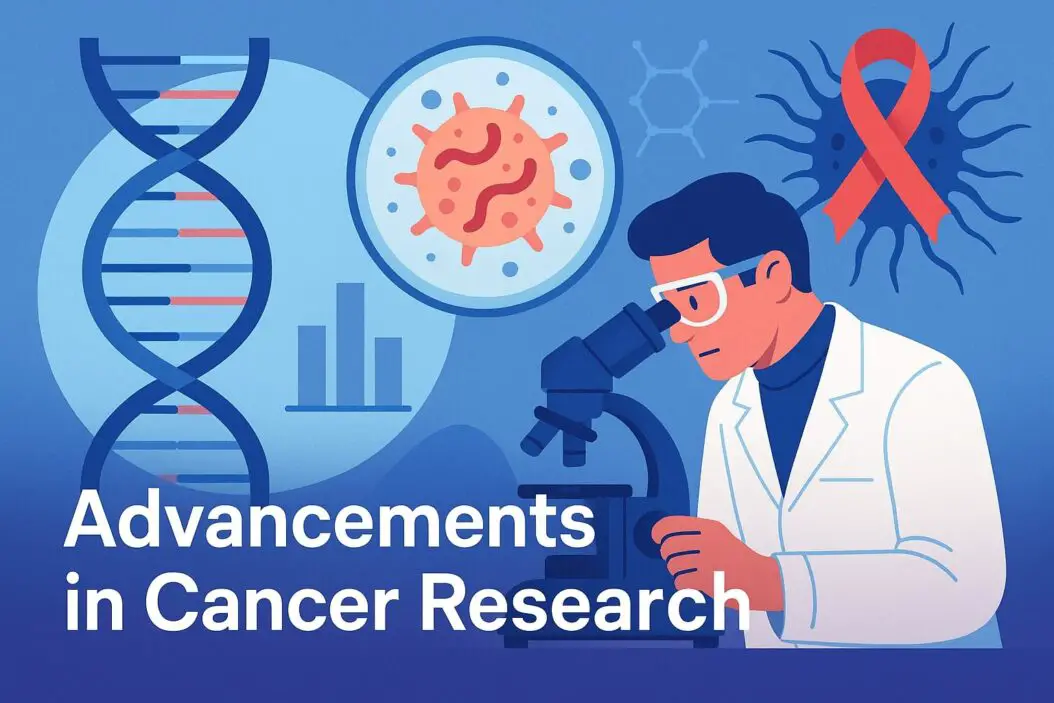
The Big Shift: From One-Size-Fits-All to Personalized Treatment
The most important change in cancer research isn’t a single drug or discovery. It’s a fundamental shift in how doctors think about the disease.
For decades, cancer treatment was broad and blunt. Chemotherapy attacked fast-dividing cells everywhere in your body. It worked sometimes, but the side effects were brutal. Now, medicine is becoming personal.
How Precision Medicine Works
Precision medicine means treating your specific cancer, not just “cancer” in general. Your tumor has unique genetic mistakes. These mistakes drive its growth. Modern cancer treatment finds those mistakes and targets them directly.
Here’s the process: doctors take a sample of your tumor and sequence its DNA. They identify which genes are broken or overactive. Then they prescribe a drug designed to hit exactly that weakness. This approach delivers three major advantages:
It kills cancer cells more effectively because the drug is designed for your tumor’s specific flaws. It causes fewer side effects because healthy cells aren’t targeted. It works faster because doctors know within days which treatment will help.
Real Example: HER2-Positive Breast Cancer
Twenty years ago, HER2-positive breast cancer was a death sentence. The cancer grew fast and didn’t respond to standard treatment. Then researchers discovered the HER2 gene and developed trastuzumab (Herceptin), a drug that attacks it. Today, many women with this cancer type survive and thrive.
This single breakthrough, understanding the genetic driver and creating a targeted drug—changed millions of lives. The same pattern is now repeating across dozens of cancer types.
Key Precision Medicine Advances (2025-2026)
| Cancer Type | Advancement | How It Works | Impact |
|---|---|---|---|
| Rectal Cancer | Dostarlimab immunotherapy | Works in tumors with mismatch repair deficiency | 100% complete response rate in trials |
| Kidney Cancer | Pembrolizumab (Keytruda) | Checkpoint inhibitor with adjuvant therapy | First drug to improve overall survival as initial treatment |
| Small Cell Lung Cancer | Tarlatamab and Durvalumab | Two different immunotherapy mechanisms | Finally effective after decades of resistance |
| Acute Lymphoblastic Leukemia | Blinatumomab (Blincyto) | Bispecific T-cell engager | Increases cure rates in children significantly |
| Any Cancer with NTRK Biomarker | Repotrectinib | Tissue-agnostic targeted therapy | Works regardless of tumor location |
| Any Cancer with HER2 | Trastuzumab deruxtecan | Antibody-drug conjugate (smart missile) | Approved for early-stage breast cancer, expanding to other types |
Immunotherapy: Teaching Your Body to Fight Back
Immunotherapy represents one of the biggest shifts in how we treat cancer. Instead of poisoning cancer cells directly, these drugs wake up your immune system to attack the tumor.
Your body has natural defense cells that patrol for disease. But cancer is sneaky. Tumor cells hide from the immune system by coating themselves with “off” signals that tell immune cells to leave them alone.
Immunotherapy drugs are designed to unblock these signals. They remove the cancer’s disguise, making it visible to your immune system again.
Checkpoint Inhibitors
Immune checkpoint inhibitors like pembrolizumab work by removing the brakes that keep your immune system from attacking cancer. Your T-cells are the immune system’s soldiers. Checkpoints are like seatbelts that prevent them from going too wild. Cancer uses these checkpoints to hide.
Checkpoint inhibitors cut the brakes. Suddenly, T-cells see cancer clearly and attack it aggressively.
CAR T-Cell Therapy
This approach goes further. Scientists take T-cells from a patient’s blood, genetically modify them to recognize cancer better, grow millions of copies in the lab, then infuse them back into the patient. These engineered cells hunt and destroy cancer with precision.
In 2024, children with diffuse midline gliomas (an extremely aggressive brain cancer) received GD2-targeted CAR T-cell therapy. Several had responses lasting two years or longer—a result doctors had never seen before. This suggests CAR T-cell therapy could transform treatment for brain cancers that have always been fatal.
TIL and TCR Therapies
In February 2024, the FDA approved the first tumor-infiltrating lymphocyte (TIL) therapy for advanced melanoma. TIL therapy harvests immune cells already present in tumors, amplifies them in the laboratory, and returns them to the patient as a stronger fighting force.
In August, the FDA approved the first T-cell receptor (TCR) therapy for advanced synovial sarcoma. These cellular therapies represent decades of pioneering work finally reaching patients.
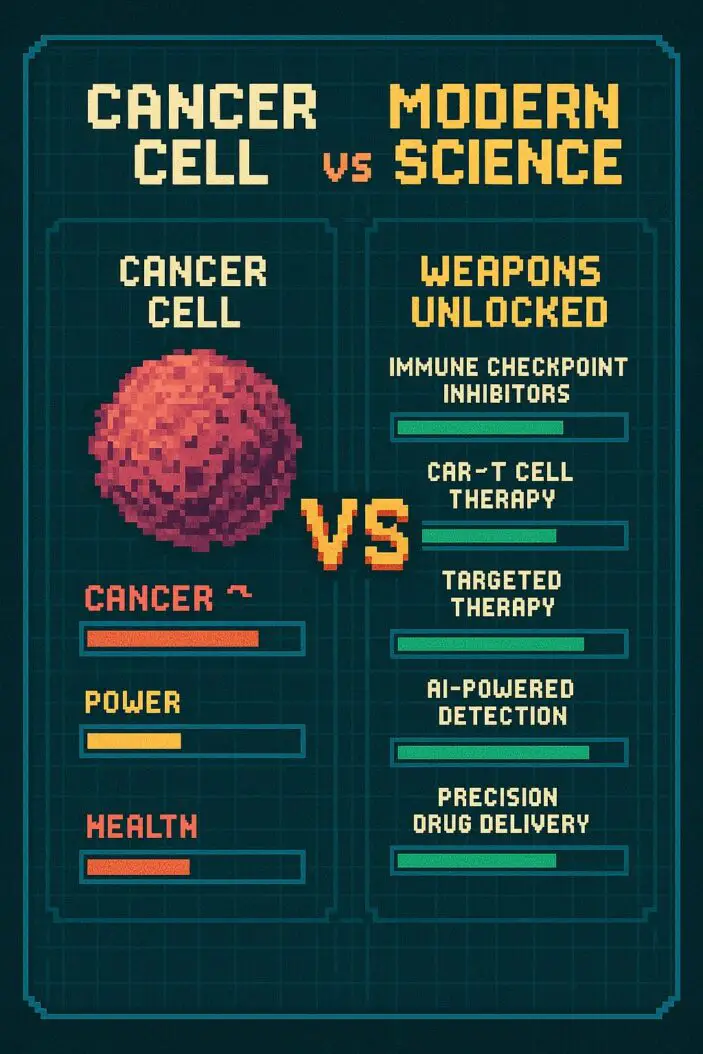
Artificial Intelligence: Finding Patterns Humans Miss
Artificial intelligence isn’t replacing doctors. It’s making them better at their jobs.
AI in Early Detection
Google Health’s AI outperforms human radiologists at finding breast cancer on mammograms. This matters because early detection dramatically improves survival rates. A cancer found at stage 1 is vastly more treatable than one discovered at stage 4.
Researchers at UC San Diego developed DeepHRD, an AI tool that detects homologous recombination deficiency (HRD) in tumors using routine biopsy slides. DeepHRD is three times more accurate than current genetic tests and has almost zero failure rate, compared to existing tests that fail 20-30% of the time.
AI in Clinical Trials
Finding the right patients for trials takes months. AI changes this. The City of Hope created HopeLLM, an AI platform that reviews patient records, summarizes medical histories, identifies which trials match which patients, and extracts data for research, all in hours instead of months.
This acceleration matters. Clinical trials move faster. More patients find treatments that might work for them. Researchers gather better data.
AI in Drug Discovery
AlphaFold, an AI system that predicts protein structures, won the 2024 Nobel Prize in Chemistry. Understanding how proteins fold is foundational to developing new drugs. AlphaFold does in hours what used to take years of research.
Cancer Vaccines: Training Immunity Before Relapses
Cancer vaccines train your immune system to attack tumors. Unlike COVID vaccines that prevent infection, cancer vaccines treat existing disease.
Personalized Neoantigen Vaccines
Researchers are developing personalized vaccines that target neoantigens, which are unique mutations found only in a patient’s cancer. This approach is highly specific. It targets the cancer’s unique flaws, not generic cancer characteristics.
In 2024, promising early trial results emerged for personalized neoantigen vaccines for head and neck squamous cell carcinoma and pancreatic cancer. These trials are moving into larger, industry-sponsored phase II testing.
The challenge: personalized vaccines are expensive and time-consuming. Scientists must sequence each patient’s tumor, design a vaccine just for that patient, and manufacture it. But the specificity means fewer side effects and potentially better outcomes.
Shared Neoantigen Vaccines
Researchers are also developing “off-the-shelf” vaccines that target mutations shared across many cancer patients. If successful, these could be mass-produced, less expensive, and delivered faster.
The National Cancer Institute predicts 2026 will bring significant progress in shared neoantigen vaccines, particularly for cancers like pancreatic cancer where mutations are more consistent across patients.
Novel Drug Mechanisms: Attacking “Undruggable” Targets
For decades, certain cancer-causing mutations seemed impossible to target. They had no obvious drug hooks. Researchers called them “undruggable.”
New drug discovery approaches are changing this. KRAS mutations, found in roughly 30% of cancers, were long considered undruggable. Now several drugs specifically target different KRAS mutations. Others target BRCA1 and BRCA2 mutations in pancreatic cancer.
At Johns Hopkins, researchers developed RK-33, a drug targeting DDX3, a gene that drives multiple tumor types. Animal trials are complete. The team is preparing an FDA application to begin human testing in late 2025 or early 2026. If successful, this could become one of the most promising cancer treatments in decades.
Cancer Cachexia: Reversing the Wasting Syndrome
Cancer cachexia is a wasting syndrome that kills roughly 30% of cancer patients. Patients lose weight and muscle mass despite eating. Their bodies consume themselves. Traditional treatments don’t help.
In 2024, a small clinical trial tested ponsegromab, an experimental drug targeting the molecular drivers of cachexia. The results were striking: the drug literally reversed cachexia-induced weight loss in people with advanced cancer.
This breakthrough demonstrates the power of basic science research. Scientists identified the specific molecular pathways causing cachexia, then developed drugs targeting those pathways. Now patients who were wasting away are gaining weight and strength again.
Understanding Tumor Architecture: New Maps of Cancer
Researchers are creating detailed maps of tumor ecosystems using advanced technologies. These maps show how cancer cells communicate with surrounding healthy cells, how they hide from the immune system, and how they resist treatment.
Understanding tumor architecture opens new treatment strategies. If you can see how cancer cells organize themselves, you can develop drugs to disrupt that organization.
Screening and Early Detection: Catching Cancer When It’s Most Treatable
Early detection saves lives. Cancers found at stage 1 are far more treatable than those found at stage 4.
New screening approaches combine AI with better imaging and biomarker detection. Minimally invasive blood tests can now detect certain cancers before symptoms appear. Next-generation sequencing (NGS) and biomarker analysis identify which patients are at highest risk and which treatments will work best.
For cancers like breast, colon, and lung cancer, regular screening with mammograms, colonoscopies, and low-dose CT scans significantly improves outcomes. But screening access varies by geography and wealth, creating health disparities.
Addressing Cancer Disparities: Reaching Patients Left Behind
Cancer doesn’t strike equally. Black Americans have higher cancer death rates than other groups. Rural patients often lack access to specialists. Poor patients can’t afford expensive treatments.
Research increasingly focuses on why these disparities exist. It’s not genetics. It’s access to care, environmental factors, poverty, healthcare system racism, and social stress.
In 2024, researchers are studying ethnic enclaves, neighborhood factors, structural racism, and how policies affect cancer outcomes. They’re developing intervention programs to close care gaps, including ensuring cancer patients have access to healthy food and transportation to appointments.
Addressing these disparities requires action beyond basic research. It demands healthcare policy changes, funding for underserved communities, and commitment to health equity.
What’s Coming in 2026 and Beyond
Experts forecast several major developments:
More personalized treatment plans based on individual genetics, leading to targeted therapies with fewer side effects. Continued advancement in immunotherapies, particularly for patients who didn’t respond to current treatments. More oral medicines replacing intravenous treatments, improving quality of life. Development of next-generation immunotherapies that work for patients who’ve already received current immunotherapies but need additional options. Advances in precision oncology making truly personalized medicine routine, not experimental. Expansion of tissue-agnostic therapies that work across multiple cancer types based on genetic markers rather than tumor location.
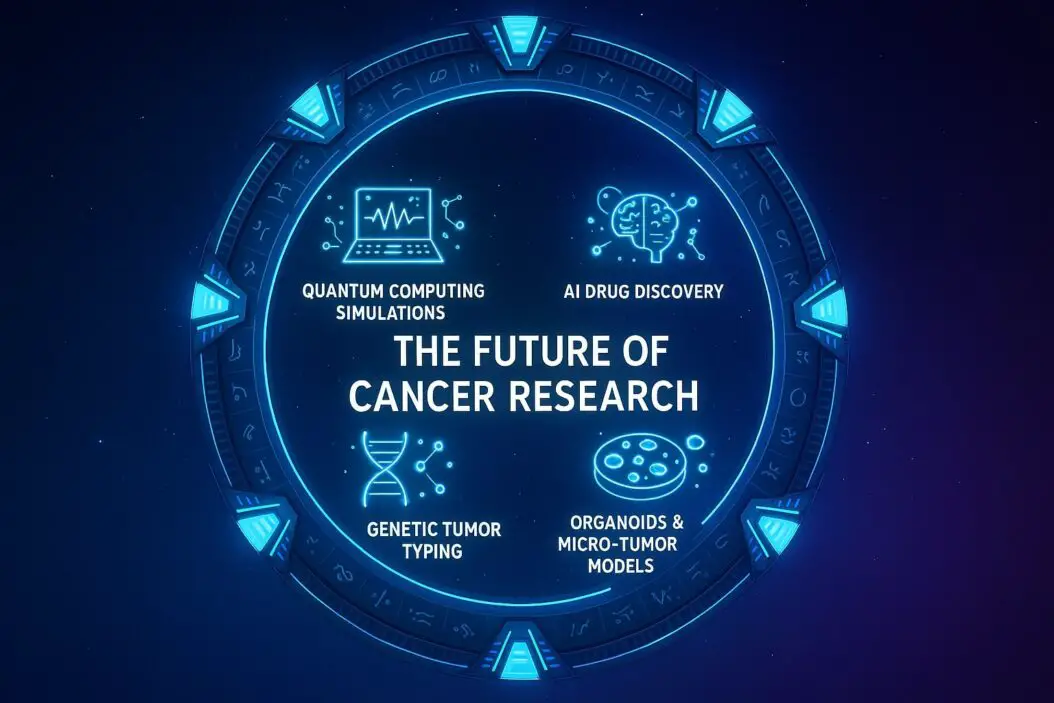
Key Takeaways
Cancer research is fundamentally changing. The shift from generic chemotherapy to precision medicine means cancer treatment is becoming more effective and less toxic. Immunotherapy is teaching immune systems to fight cancer. AI is accelerating discovery and improving diagnosis. Clinical trials are reaching patients faster. And researchers are focusing on health equity to ensure all patients benefit from these advances.
If you or a loved one face cancer, ask your oncologist about molecular testing to identify genetic drivers of your specific cancer. Ask about clinical trials matching your tumor’s characteristics. Ask about immunotherapy options. The treatments available today would have seemed impossible just five years ago.
Cancer remains serious. But for many patients, it’s becoming a manageable disease rather than a death sentence.
Frequently Asked Questions
Is my cancer covered by these new treatments?
It depends on your specific cancer type and genetic makeup. Ask your oncologist whether molecular testing and targeted therapies are appropriate for your diagnosis. Some insurance plans cover precision medicine tests and newer immunotherapies. Some don’t. Patient advocate organizations and your hospital’s financial counselor can help navigate coverage.
How do I find clinical trials testing new cancer treatments?
Visit ClinicalTrials.gov, a database of all registered clinical trials in the United States. Enter your cancer type and location. Many specialized cancer centers also maintain trial registries. Your oncologist can also identify trials appropriate for your diagnosis and health status.
Are these new treatments safe?
All new cancer treatments undergo rigorous testing in clinical trials before FDA approval. However, all cancer treatments carry side effects. Your oncologist should discuss specific risks and benefits of any recommended treatment. Newer targeted therapies and immunotherapies generally have more favorable side effect profiles than traditional chemotherapy, but individual responses vary.
How long until these treatments are available at my local hospital?
FDA-approved treatments typically reach major academic medical centers within months. Smaller regional hospitals may take longer. Urban areas generally have faster access than rural areas. If a new treatment isn’t available locally but is appropriate for your cancer, ask your oncologist about referral to a center offering it.
What should I ask my oncologist about my cancer treatment?
Ask about molecular testing of your tumor. Ask whether you’re a candidate for immunotherapy or targeted therapy. Ask about clinical trials. Ask about genetic counseling if your cancer might be hereditary. Ask about palliative care to manage side effects and improve quality of life. Ask how you’ll know if treatment is working.
Summary
Cancer research in 2025 and 2026 represents a watershed moment. Precision medicine, immunotherapy, artificial intelligence, and cellular therapies are transforming cancer from a uniformly deadly diagnosis into a disease that many patients survive. The speed of progress is accelerating. Drugs that entered development five years ago are now saving lives.
This doesn’t mean cancer is solved. Many patients still face extremely difficult journeys. But the trajectory is clear: better treatments, fewer side effects, more personalized approaches, and increasing survival rates.
If you’re facing cancer, you’re living in the best time in history to receive treatment. The tools available today would have been miracles a generation ago.
Resources for Learning More
- National Cancer Institute (NCI) provides comprehensive cancer information, clinical trial finder, and patient resources
- American Association for Cancer Research (AACR) publishes cutting-edge cancer research and expert forecasts
- ClinicalTrials.gov allows you to search all clinical trials by location and cancer type

- How to Improve Wi-Fi Signal on My Phone (2026 Guide) - March 17, 2026
- How to Enable MMS Messaging on iPhone (2026 Guide) - March 15, 2026
- 9 Best Software for Web Development in 2026 - March 15, 2026