
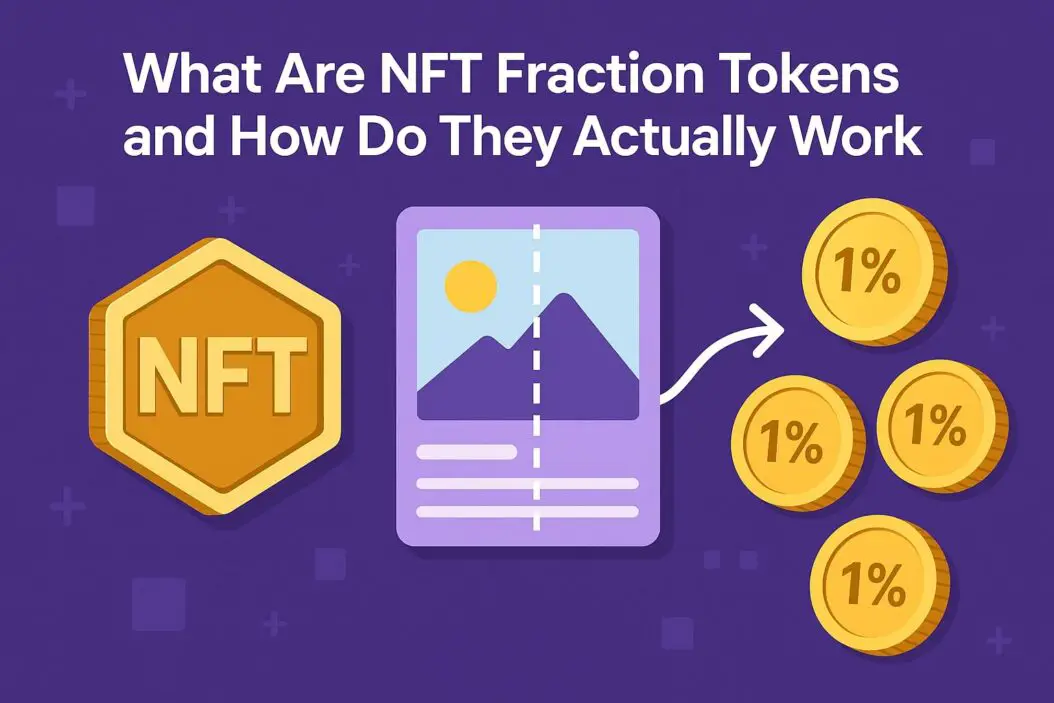
NFT fraction tokens are shares of a single NFT. Instead of one person owning an entire digital asset, multiple people can own pieces of it. Think of it like owning part of a painting hanging in a museum. You don’t own the whole thing, but you own a percentage of it.
This concept democratizes NFT ownership. High-value digital assets that cost millions become accessible to everyday investors with smaller budgets.
The Core Problem They Solve
NFT prices can be extreme. A top digital artwork might sell for $5 million. Most people can’t afford this. Fraction tokens break that barrier.
Here’s what happens:
- Owner holds a valuable NFT
- They convert it into 1,000 (or any number) fraction tokens
- Each token represents 1/1000th ownership
- Investors buy as many tokens as they want
- Everyone now owns a piece of the asset
The result is access. Liquidity. Shared ownership.
How NFT Fractionalization Actually Works
Fractionalization is a technical process that creates tradeable tokens from a single NFT. Here’s the step-by-step process:
Step One: NFT Selection An owner chooses an NFT they want to split. This could be a digital artwork, collectible, or any blockchain-based asset.
Step Two: Smart Contract Deployment A smart contract is created. This is code that runs on the blockchain automatically. The contract holds the original NFT in a secure vault.
Step Three: Token Generation The smart contract creates new tokens. If the owner decides to create 10,000 fraction tokens, the contract generates exactly that many. Each token represents 1/10,000th of the original NFT.
Step Four: Distribution Tokens get distributed. The original owner can sell them, keep them, or use them however they want. Other investors can now buy these tokens on exchanges.
Step Five: Governance (Sometimes) With many fraction tokens, owners sometimes vote on what to do with the asset. “Should we sell it?” “Should we rent it?” Voting power is usually tied to token amount.
Key Players in the Fraction Token Space
Several platforms make fractionalization possible:
Fractional.Art was one of the first platforms. It let users list NFTs and create fraction tokens. The platform is no longer operating, but it pioneered the model.
Liquid Gallery focuses on fractionalized art. Users can create and trade fractional shares of high-value pieces.
NFTX uses a different model. Instead of fractionalization, it creates fungible tokens backed by NFTs in a vault. It’s similar in outcome but different in structure.
The Graph’s protocol layer provides blockchain infrastructure that many fractional platforms use.
These platforms typically charge fees ranging from 2% to 10% when you fractionalize an NFT.
Real World Example: How Fractionalization Works in Practice
Imagine a digital artist creates a unique piece. It gets valued at $500,000.
The artist decides to fractionalize it into 500,000 tokens. Each token is worth approximately $1.
Now, 500 investors can each buy 1,000 tokens for $1,000. Each owns 0.2% of the artwork.
If the artwork appreciates to $600,000 in value, each token is now worth $1.20. Investors who bought at $1 are up 20%.
Those investors can sell their tokens anytime. They can also trade them on decentralized exchanges. Liquidity exists that didn’t before.
If the community votes to sell the artwork, the proceeds get distributed to token holders proportionally.
The Different Tokenomics Models
Not all fraction tokens work the same way. Here are the main structures:
Equal Share Model All fraction tokens are identical. You own exactly what your percentage says you own. If you have 10% of tokens, you own 10% of the asset. This is the most common approach.
Bonding Curve Model Prices change based on how many tokens exist. Early buyers pay less. Late buyers pay more. This incentivizes early participation but adds complexity.
Reserve Model Tokens are backed by a reserve of other assets (usually stablecoins like USDC). This adds stability. If the NFT is disputed or destroyed, token holders get their reserve value back.
Governance Token Model Some fraction tokens include voting rights. Holders decide the asset’s fate. Others are purely ownership shares with no voting power.
Each model has tradeoffs. Equal share is simple but offers no downside protection. Reserve model offers protection but requires maintaining reserves.
Advantages of NFT Fraction Tokens
Lower Entry Cost You don’t need a fortune to own valuable digital assets. $500 or $5,000 works.
Increased Liquidity You can sell your tokens quickly. The original NFT owner couldn’t. Fractional ownership creates buyers and sellers.
Risk Distribution Losing $5,000 hurts less than losing $500,000. You’re spreading risk across your portfolio.
Democratic Access Top collectors, artists, and investors no longer gatekeep valuable assets.
Potential Appreciation If the underlying NFT increases in value, your tokens appreciate too. You get investment upside.
Passive Income Potential Some fractional platforms let you lend your tokens to others or stake them for rewards. This generates additional income.
| Advantage | Impact | Time to Realize |
|---|---|---|
| Lower Cost | More people can participate | Immediate |
| Higher Liquidity | Easier selling/trading | Days, not months |
| Risk Spread | Smaller individual losses | Depends on asset performance |
| Shared Ownership | Community involvement | Immediate |
| Appreciation Potential | Investment returns | Months to years |
The Real Risks and Limitations
Fraction tokens aren’t perfect. Here’s what goes wrong:
Smart Contract Bugs Code can have vulnerabilities. If the contract has a flaw, your tokens could become worthless instantly. This has happened before. Security audits help but don’t guarantee safety.
Liquidity Vanishes Fast Having many tokens sounds good. But if nobody wants to buy, you’re stuck. A fraction token with 5 daily trades has almost no liquidity. You can’t sell when you need to.
The Underlying NFT Could Fail If the digital artwork gets taken down, delisted, or the creator disavows it, the value collapses. Your fraction tokens become worthless.
Governance Gridlock With thousands of token holders voting, decisions take forever. Conflicts arise. Minority token holders feel powerless.
Tax Complexity Trading fraction tokens creates tax events in most countries. You owe capital gains tax on profits. Tracking becomes complicated with many small trades.
Limited Utility Most fraction tokens do nothing. They don’t generate income. They don’t give you special access. You’re purely betting on price appreciation.
Custody and Storage You must store tokens securely. Use a hardware wallet. If you lose access, your tokens are gone forever. This is different from owning stock, where a broker holds it.
Fraction Tokens Versus Buying NFTs Directly
What’s the difference? When should you choose one over the other?
| Factor | Fraction Tokens | Buying Full NFT |
|---|---|---|
| Upfront Cost | $100 to $10,000 | $50,000 to millions |
| Liquidity | High (many traders) | Low (few buyers) |
| Ownership % | Partial (2% to 50%) | Complete (100%) |
| Control | None (community decides) | Full control |
| Custody Complexity | Lower | Higher |
| Tax Reporting | Simple | Can be complex |
| Time to Sell | Days or hours | Weeks or months |
| Risk Level | Lower (spread) | Higher (concentrated) |
If you want to invest passively in digital assets without managing custody, fraction tokens work well. If you want full control and don’t mind illiquidity, buying full NFTs is better.
How to Buy and Sell NFT Fraction Tokens
The process is straightforward:
Finding Platforms Visit a fractional NFT marketplace. Popular options include Liquid Gallery or similar platforms. Browse available fractionalized assets.
Connecting Your Wallet You’ll need a blockchain wallet like MetaMask or Phantom. Connect it to the platform. Authorize transactions.
Selecting Your Investment Choose a fractionalized NFT. Review the details. Understand what you’re buying shares of. Read about the asset’s history and value drivers.
Making the Purchase Click buy. Enter the number of tokens you want. Confirm the transaction. Pay gas fees (blockchain transaction costs). Wait for confirmation.
Storing Your Tokens Tokens go into your wallet. You now own a portion of the underlying asset. You can hold them, trade them, or sell them anytime.
Selling Later Go back to the marketplace or a decentralized exchange. List your tokens at your desired price. Wait for a buyer. Once sold, funds arrive in your wallet.
The entire process takes minutes. You don’t need a broker or approval. You need only a wallet and funds.
The Legal and Regulatory Landscape
Regulations vary by country. This is still an emerging area.
United States The SEC is watching. If fraction tokens are deemed securities, they need registration. Most platforms are in gray territory. Tokens that include voting rights or revenue sharing are more likely to be regulated as securities.
European Union The EU is stricter. Regulations under MiCA (Markets in Crypto-Assets Regulation) apply. Token issuers need to follow disclosure rules.
Rest of World Most countries lack clear rules. Some ban them outright. Others ignore them.
Your best move: Research your country’s stance. Consult a tax professional. Understand the implications before investing.
Common Use Cases Beyond Investment
Fractionalization has broader applications:
Museum and Gallery Management Instead of one patron owning a piece, a museum can fractionalize it. The community becomes stakeholders. This creates engagement.
Corporate Asset Ownership Companies tokenize high-value assets. Real estate. Equipment. Art collections. Ownership becomes tradeable.
Artist Monetization Creators fractionalize their work. They retain some tokens. If value increases, they benefit. Fans can also invest in artist success.
Real World Asset Bridging Physical assets (real estate, fine art, automobiles) get tokenized and fractionalized. You can own a piece of a Picasso or an apartment building.
These use cases are still emerging. As blockchain adoption grows, fractionalization could become mainstream.
Summary and Key Takeaways
NFT fraction tokens democratize access to high-value digital assets. They convert expensive single ownership into affordable shared ownership.
Here’s what matters:
Fraction tokens let you invest in premium NFTs with small amounts of capital. You gain liquidity that full NFT owners lack. You spread risk. You get potential upside.
However, risks exist. Smart contract failures can wipe out value. Liquidity can evaporate. Regulations are unclear. Tax complications arise.
Fraction tokens work best if you want passive exposure to digital assets without managing custody or dealing with illiquidity. They don’t work if you demand full control or need guaranteed safety.
The technology is real. The use cases are valid. But hype often exceeds reality. Approach thoughtfully. Start small. Do your own research.
The fractional ownership model will likely expand beyond NFTs into real estate, art, and other high-value assets. Understanding it now positions you ahead of the curve.
Frequently Asked Questions
Can I lose money on fraction tokens?
Yes. If the underlying NFT loses value, your tokens lose value. If the smart contract fails, you could lose everything. Like any investment, there’s risk.
How much are gas fees?
Gas fees vary. During network congestion, you might pay $10 to $100 per transaction. During quiet periods, $1 to $5. This is a real cost to factor in.
Are fraction tokens legal?
It depends on your country and how they’re structured. In the US, they’re likely securities if they include voting rights or revenue sharing. Consult a lawyer in your jurisdiction.
How long does it take to sell fraction tokens?
Minutes to hours if liquidity exists. Days or weeks if nobody’s buying. It depends entirely on market demand for that specific token.
Do fraction tokens generate income?
Most don’t. You’re betting on price appreciation. Some platforms let you stake tokens or lend them for rewards, but this is rare and adds complexity.
