
Privacy in crypto is not just a trend. It is a growing need. As governments tighten surveillance and data breaches become common, more people want financial transactions that stay private.
Privacy coins solve a real problem. They hide who sent money, who received it, and how much was sent. Regular crypto like Bitcoin does not do this. Every Bitcoin transaction is visible on a public blockchain forever.
This guide covers the top 10 privacy coins worth watching in 2026. You will learn what each coin does, why it matters, and what risks come with it.
What Are Privacy Coins?
Privacy coins are cryptocurrencies with built-in tools that protect transaction data. They use advanced cryptography to hide:
- Sender addresses
- Receiver addresses
- Transaction amounts
- Transaction history
Some coins are private by default. Others make privacy optional. Both approaches have tradeoffs, which you will see below.
Why Privacy Coins Matter in 2026
Regulators around the world are pushing for stricter crypto rules. At the same time, individuals and businesses have legitimate reasons to keep financial data private. These include:
- Protecting business deals from competitors
- Avoiding targeted theft or scams
- Preserving basic financial autonomy
- Operating in countries with unstable governments or currency controls
Privacy coins are not just for people hiding something. They are for people who believe financial privacy is a right, not a privilege. You can read more about the global state of financial privacy at the Electronic Frontier Foundation’s coverage of financial surveillance.
How Privacy Coins Work: A Quick Overview
Before jumping into the list, it helps to understand the three main privacy technologies used across these coins.
Ring Signatures mix a user’s transaction with others, making it hard to trace the original sender.
Zero-Knowledge Proofs (ZKPs) let one party prove they know something without revealing the actual data. In crypto, this means proving a transaction is valid without showing the details.
CoinJoin and Mixing combine multiple transactions into one, obscuring individual inputs and outputs.
Stealth Addresses generate a one-time address for each transaction, so no two payments are linked.
Now, the list.
Top 10 Privacy Coins to Watch in 2026
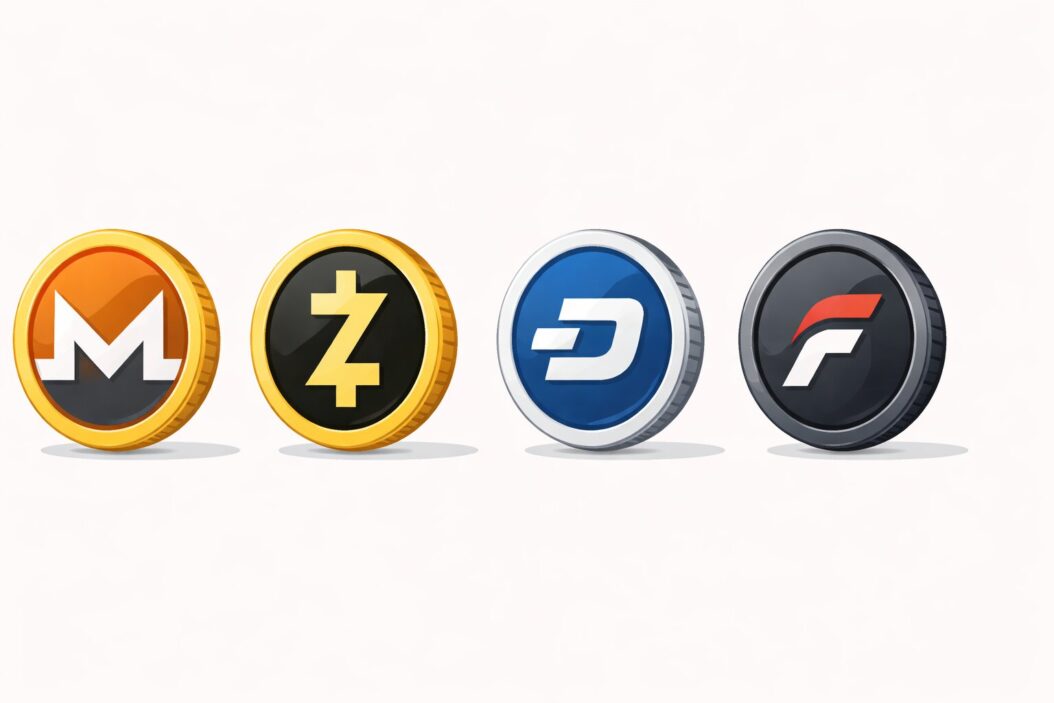
1. Monero (XMR)
Monero is the most established privacy coin in the world. It has been around since 2014 and remains the gold standard for on-chain privacy.
How it works:
- Uses Ring Signatures to hide the sender
- Uses Stealth Addresses for the receiver
- Uses RingCT to hide transaction amounts
Everything is private by default. There is no option to make a Monero transaction public. This is both its strength and the reason regulators dislike it.
Why it matters in 2026:
Several exchanges have delisted Monero due to regulatory pressure. But this has not killed demand. It has actually increased interest from privacy-focused users. Its developer community remains active, and protocol upgrades continue regularly.
Risk: Ongoing delistings from major exchanges reduce liquidity and accessibility.
2. Zcash (ZEC)
Zcash launched in 2016 and introduced zero-knowledge proofs to cryptocurrency. It uses a specific type called zk-SNARKs.
How it works:
- Offers two address types: transparent (t-addresses) and shielded (z-addresses)
- Shielded transactions are fully private
- Transparent transactions work like Bitcoin
Why it matters in 2026:
Zcash’s main weakness has historically been that most users do not use shielded addresses. But that is changing. Recent upgrades have made shielded transactions cheaper and faster. The Electric Coin Company continues to push for wider shielded adoption.
Zcash also has a more regulatory-friendly image than Monero because the transparent option exists.
Risk: Privacy is optional, not default. Most transactions remain transparent in practice.
3. Dash (DASH)
Dash is not a pure privacy coin, but it has a privacy feature called PrivateSend that makes it worth including here.
How it works:
- PrivateSend uses a CoinJoin-based mixing system
- Users opt in to private transactions
- Masternodes facilitate the mixing process
Why it matters in 2026:
Dash has a long history and a working payments infrastructure. It is widely used in Latin America and parts of Africa as a everyday payment tool. PrivateSend adds an optional privacy layer for those who need it.
Risk: Privacy is optional and considered weaker than Monero or Zcash by most researchers.
4. Grin (GRIN)
Grin is a lightweight implementation of the MimbleWimble protocol. It launched in 2019 with no premine, no ICO, and no founder’s reward.
How it works:
- MimbleWimble eliminates transaction history by merging transactions
- No addresses exist on-chain
- Transactions are verified without revealing amounts
Why it matters in 2026:
Grin appeals to people who value simplicity and fairness. Its codebase is small and clean. The lack of any central team or treasury makes it genuinely decentralized.
Risk: Low liquidity and a small community mean it gets less attention than top-tier coins.
5. Beam (BEAM)
Beam is another MimbleWimble coin, but with a more structured development team and governance than Grin.
How it works:
- Same MimbleWimble foundation as Grin
- Supports confidential transactions and confidential assets
- Has added smart contract functionality
Why it matters in 2026:
Beam has been actively building. It added support for DeFi features and confidential assets, which allows private tokenized assets. This is a niche but growing use case.
Risk: Smaller ecosystem compared to Monero or Zcash. Adoption is still limited.
6. Horizen (ZEN)
Horizen started as ZenCash and rebranded with a broader vision. It uses zk-SNARKs like Zcash but focuses more on building a platform for private applications.
How it works:
- Supports shielded transactions for ZEN coin
- Has a sidechain system that allows developers to build private apps
- Uses a large node network for resilience
Why it matters in 2026:
Horizen is positioned as more than a coin. Its sidechain architecture allows companies to build custom blockchains with built-in privacy. This makes it interesting beyond just peer-to-peer payments.
Risk: The project has shifted focus multiple times, which has diluted its identity.
7. Secret Network (SCRT)
Secret Network is different from most coins on this list. It is not just about hiding payments. It brings programmable privacy to smart contracts.
How it works:
- Smart contracts on Secret Network run inside trusted execution environments (TEEs)
- Input data, output data, and contract state can all be kept private
- Supports private DeFi, private NFTs, and private data storage
Why it matters in 2026:
The idea of private smart contracts is powerful. Regular DeFi exposes all transaction data. Secret Network tries to fix that. It connects to other chains via IBC (Inter-Blockchain Communication), expanding its reach.
Risk: TEEs have known vulnerabilities. Security researchers have raised concerns about hardware-based privacy assumptions.
8. Firo (FIRO)
Formerly known as Zcoin, Firo has been quietly improving its privacy tech for years. It introduced the Lelantus Spark protocol.
How it works:
- Lelantus Spark allows fully private transactions with hidden amounts and addresses
- Users “mint” coins into a private pool, then spend anonymously
- No transaction graph is visible
Why it matters in 2026:
Firo is underrated. Its Lelantus Spark protocol is one of the more elegant privacy solutions in the space. The team has a history of responsible disclosure and active research.
Risk: Low market visibility. Most mainstream crypto users have never heard of it.
9. Dero (DERO)
Dero is a relatively unknown project that claims to combine the Directed Acyclic Graph (DAG) structure with strong cryptographic privacy.
How it works:
- Uses a homomorphic encryption-based approach
- Private smart contracts are supported
- Transactions are fast due to the DAG architecture
Why it matters in 2026:
Dero is interesting because it targets both privacy and smart contract functionality with a different technical approach than Secret Network. It has a small but dedicated developer base.
Risk: Limited independent audits and low community size make it harder to verify claims.
10. Pirate Chain (ARRR)
Pirate Chain is a Zcash fork that enforces shielded transactions only. It takes the strongest possible stance on default privacy.
How it works:
- All transactions are shielded using zk-SNARKs
- No transparent addresses exist
- Uses delayed Proof of Work (dPoW) for security
Why it matters in 2026:
If you believe privacy should never be optional, Pirate Chain is a logical choice. It solves the biggest weakness of Zcash by making privacy mandatory.
Risk: Very low liquidity. Harder to access and use than more established coins. Name has not helped its legitimacy image.
Top 10 Privacy Coins at a Glance
| Coin | Privacy Type | Default Privacy | Smart Contracts | Relative Maturity |
|---|---|---|---|---|
| Monero (XMR) | Ring Sig + RingCT | Yes | No | High |
| Zcash (ZEC) | zk-SNARKs | Optional | No | High |
| Dash (DASH) | CoinJoin | Optional | Limited | High |
| Grin (GRIN) | MimbleWimble | Yes | No | Medium |
| Beam (BEAM) | MimbleWimble | Yes | Limited | Medium |
| Horizen (ZEN) | zk-SNARKs | Optional | Via Sidechains | Medium |
| Secret Network (SCRT) | TEE-based | Yes | Yes | Medium |
| Firo (FIRO) | Lelantus Spark | Yes | No | Medium |
| Dero (DERO) | Homomorphic | Yes | Yes | Low |
| Pirate Chain (ARRR) | zk-SNARKs | Yes | No | Low |
Regulatory Landscape in 2026
Privacy coins face real regulatory risk. The EU’s AMLR (Anti-Money Laundering Regulation), enforcement actions in Japan, South Korea, and Australia have already led exchanges to delist privacy coins.
Key points to understand:
- Holding privacy coins is legal in most countries
- Trading them on regulated exchanges is increasingly restricted
- Using them for illegal purposes is, obviously, illegal
- Peer-to-peer trading remains the main access point for many users
This is not going away. If you hold or plan to hold privacy coins, understand the rules in your jurisdiction. The FATF guidance on virtual assets is worth reading to understand where global regulation is headed.
Who Should Consider Privacy Coins?
Privacy coins are not for everyone. They are worth considering if you:
- Live in a country with authoritarian financial monitoring
- Run a business that needs to protect competitive pricing or contracts
- Are a journalist, activist, or researcher working in sensitive areas
- Believe strongly in financial privacy as a principle
- Are diversifying a crypto portfolio with higher-risk, higher-conviction assets
They are probably not a good fit if you:
- Need easy on and off ramps via major exchanges
- Are new to crypto and still learning the basics
- Cannot handle high volatility or low liquidity
Risks Specific to Privacy Coins
Beyond normal crypto risks, privacy coins carry unique challenges:
Exchange Delistings: As regulations tighten, more exchanges are removing privacy coins. This reduces liquidity and can cause sudden price drops.
Regulatory Bans: Some jurisdictions may move toward outright bans on holding or transacting privacy coins.
Audit Difficulty: Because transactions are private, on-chain analysis firms cannot verify protocol claims as easily. This cuts both ways: better privacy, but harder to independently verify.
Smaller Communities: Most privacy coins outside Monero and Zcash have small teams and limited funding. Protocol bugs or abandoned development are real risks.
How to Evaluate a Privacy Coin Before Investing
Ask these questions before putting money into any privacy coin:
- Is the privacy on by default or optional?
- Has the cryptographic protocol been independently audited?
- Is the development team public and active?
- Is there a real community using this coin, or just speculation?
- How is it affected by current regulations in your country?
- Where can you actually buy and sell it?
No coin will score perfectly on all six. But going through this checklist will help you avoid the worst mistakes.
Conclusion
Privacy coins serve a genuine need in 2026. Financial surveillance is increasing. Data breaches are routine. People want options.
Monero remains the strongest choice for pure payment privacy. Zcash is more accessible and regulatory-friendly. Secret Network is interesting if you care about private smart contracts. Firo is underrated and technically solid.
The rest of the list has promise but comes with higher risk and lower liquidity.
Whatever you choose, understand the technology, know your local regulations, and only put in what you can afford to lose. Privacy is a feature worth paying attention to. Just go in with clear eyes.
Frequently Asked Questions
Are privacy coins legal to own in 2026?
In most countries, yes. Owning a privacy coin is generally legal. The issue is access. Many regulated exchanges have delisted them. Using privacy coins for illegal activity is of course illegal, just like using cash for illegal activity is illegal. Always check the specific rules in your country.
Is Monero the best privacy coin?
For pure payment privacy, Monero is widely considered the strongest option. Its privacy is on by default, and the cryptography has been reviewed extensively. But “best” depends on what you need. If you want smart contract functionality, Secret Network is more relevant. If you want something with more exchange access, Zcash is easier to buy.
Why are exchanges delisting privacy coins?
Regulatory pressure is the main reason. Bodies like FATF have pushed exchanges to implement strict KYC and AML controls. Privacy coins make transaction monitoring harder, so many regulated exchanges remove them to stay compliant. This trend has accelerated since 2023 and continues into 2026.
Can privacy coins be traced?
It depends on the coin. Monero’s tracing has resisted most known attempts, though researchers continue to look for weaknesses. Zcash’s shielded transactions are also very strong, but most Zcash transactions are not shielded in practice. Dash’s PrivateSend has been partially de-anonymized in some research studies. No privacy tool is perfect forever.
What is the difference between privacy coins and Bitcoin mixers?
Bitcoin mixers are third-party services layered on top of a transparent blockchain. They add privacy after the fact and have varying reliability. Privacy coins build privacy into the protocol itself. This makes it structurally stronger and not dependent on a trusted third party. Mixers are also legally riskier in many jurisdictions following enforcement actions in the US and Europe.

- How to Fix Overscan on Windows 11/10: Stop Your Screen Getting Cut Off (2026) - April 1, 2026
- How to Disable Lock Screen on Windows 11/10 in 2026 - April 1, 2026
- Top 7 NFT Integration Ideas for Brands in 2026 - March 31, 2026