
Sonic.exe isn’t a real virus or actual game threat. It’s a creepypasta story that became one of the most influential horror narratives on the internet. Created in 2011, this fictional tale about a haunted Sonic the Hedgehog game has spawned countless adaptations, fan games, and cultural references that continue to circulate today.
If you’re here because you’re curious about internet folklore, want to understand gaming horror culture, or simply wonder what all the hype is about, this guide explains everything you need to know. We’ll cover what it actually is, how it became so popular, and why it still matters to internet communities in 2026.
What Is Sonic.exe Exactly?
Sonic.exe is a creepypasta story, which means it’s a piece of short horror fiction shared across internet forums. The story was originally posted on the 4chan imageboard in 2011 by a user named “JC the X.”
The narrative follows a narrator who receives a haunted copy of Sonic the Hedgehog for the Sega Genesis. The disc is corrupted and features disturbing glitches, twisted versions of classic characters, and increasingly sinister events. The antagonist is a demonic entity that appears as a twisted Sonic character, eventually revealed to be named “Sonic.exe.”
The genius of this story was its simplicity. It took a beloved childhood video game character and recontextualized it as something frightening. The corrupted graphics, reversed audio, and distorted character designs created an unsettling atmosphere that resonated with readers.
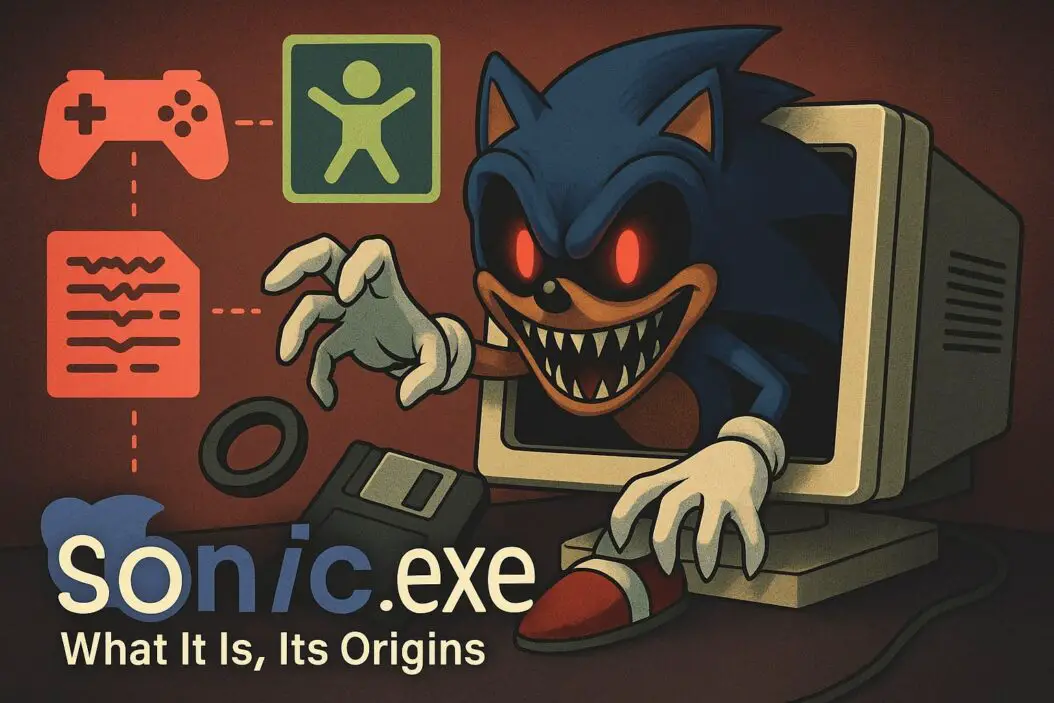
The Story’s Core Elements
The original narrative contains several key components that made it memorable:
The Haunted Cartridge: The premise involves a mysterious disc obtained from an unusual source. This “haunted game” concept taps into fears many people have about technology and the unknown.
Corrupted Characters: Recognizable Sonic characters appear grotesquely distorted. Tails has a stretched face, Knuckles appears skeletal, and Amy is reimagined as something horrifying.
Atmospheric Horror: Rather than relying on jump scares, the story builds dread through descriptions of glitched graphics, reversed sound effects, and the narrator’s growing psychological distress.
Demonic Entity: The game gradually reveals itself to be haunted by a malevolent presence that exists within the code itself, communicating through text and visual distortions.
Meta-Horror: The entity targets the narrator directly, breaking the fourth wall and suggesting the haunting can spread beyond the game cartridge.
How Sonic.exe Became a Cultural Phenomenon
The story didn’t instantly become famous. Its rise happened gradually across different platforms and communities.
4chan Origins: It started on 4chan’s paranormal board where creepypasta stories were regularly shared. The format was simple: text-based horror with no images or special effects needed.
Reddit Amplification: By 2012 and 2013, the story migrated to Reddit communities focused on horror, gaming, and creepypasta. Subreddits dedicated to creepypasta helped distribute it to wider audiences.
YouTube Readings: Content creators began recording narrations of the story, often with added atmospheric music and sound effects. These videos accumulated millions of views, introducing the concept to people who had never visited horror forums.
Fandom Creation: The most significant factor was fan involvement. Artists created visual interpretations, musicians produced soundtracks, and game developers created playable horror games based on the concept.
Know Your Meme Documentation: The meme tracking website documented Sonic.exe extensively, helping people understand its cultural significance and tracing its evolution.
Why Sonic.exe Resonated So Strongly
Several factors explain why this particular story captured imaginations so thoroughly.
Nostalgic Fear: Sonic the Hedgehog represents a formative experience for many people who grew up in the 1990s. Corrupting that nostalgia creates cognitive dissonance that feels genuinely unsettling.
Relatable Format: The story used a format familiar to horror fans. It didn’t require special effects, cinematic production, or major studio backing. Anyone with a text editor could contribute to the mythology.
Accessibility: Unlike AAA horror games that require specific consoles or PCs, the creepypasta was freely available to anyone with internet access. Reading and sharing it required zero barriers to entry.
Community Participation: The story became a collaborative project. Different writers created sequels, prequels, and alternate interpretations. This participatory aspect gave fans ownership over the narrative.
Psychological Depth: Beyond jump scares, the story explored themes of digital decay, existential dread, and the uncanny valley. It suggested that horror could exist in familiar spaces corrupted by something wrong.
Sonic.exe Fan Games and Adaptations
The creepypasta inspired numerous fan-made games that actually bring the concept to life as playable experiences.
Sonic.exe Flash Games: The earliest fan games were simple Flash-based projects. These games mimicked the original Sega Genesis style but included deliberate graphical glitches and unsettling mechanics.
Sonic.exe Remaster: A fan project that recreated portions of the original Sonic game with horror elements. It features playable levels that progressively become more distorted and disturbing as the game progresses.
The Game Releases: Various developers released independent games claiming to be “the real” Sonic.exe game. Most were free downloads distributed through itch.io or similar platforms.
Quality Variation: Not all fan games maintain the psychological horror approach. Some lean into action and combat. Others focus purely on atmosphere and environmental storytelling.
The best fan adaptations understand that Sonic.exe works because of what’s implied rather than what’s shown directly. The scariest moments are the ones that let your imagination fill in the gaps.
The Problem With Modern Interpretations
The original creepypasta succeeded through restraint. Over time, many adaptations have lost that quality.
Overstated Gore: Some modern takes replace psychological horror with excessive violence and graphic imagery. This often reduces the tension rather than amplifying it.
Overcomplicated Lore: The original story’s vagueness was a strength. It left questions unanswered. Many fan works try to explain everything, reducing the sense of mystery.
Character Bloat: The original focused on a few characters and the narrator. Later adaptations introduce numerous antagonists and supernatural entities, diluting the threat.
Lost Atmosphere: Without the careful sound design and visual corruption of later multimedia adaptations, some versions feel rushed or poorly executed.
The most effective Sonic.exe content still follows the original template: familiar corrupted into unsettling, with restraint and atmosphere prioritized over spectacle.
Is Sonic.exe Still Relevant in 2026?
Yes, but in evolved ways. The story has become embedded in broader internet culture.
Gaming Horror Archetype: Sonic.exe established “haunted game” as a recognizable horror subgenre. Games like Poppy Playtime and similar projects owe something to its template.
Nostalgic Horror Trend: The current cultural moment favors “vaporwave” aesthetics and corrupted versions of childhood media. Sonic.exe fits perfectly into this sensibility.
Educational Value: Media studies and digital culture courses now reference Sonic.exe when discussing how internet communities create and evolve narratives.
Continued Fan Activity: New artwork, games, and story adaptations appear regularly. The community around Sonic.exe hasn’t diminished.
Meme Integration: Sonic.exe references appear in memes, jokes, and casual internet conversations. It’s become part of a shared cultural vocabulary for people who grew up with internet access.
Sonic.exe vs. Similar Creepypastas
Understanding how Sonic.exe compares to other creepypastas helps explain its unique position.
| Creepypasta | Format | Success Factor | Cultural Impact |
|---|---|---|---|
| Sonic.exe | Corrupted game narrative | Nostalgia plus restraint | Very high; established genre |
| Ben Drowned | Game corruption story | Literary quality and atmosphere | High; influenced horror writing |
| Jeff the Killer | Character-focused | Shareable villain archetype | Very high; mainstream recognition |
| The Russian Sleep Experiment | Scientific horror | Surreal and disturbing | Medium; often considered fake |
| Slenderman | Multimedia format | Visual design and lore building | Very high; extended to films |
Sonic.exe’s advantage was arriving at the right time with the right format. It didn’t require extensive lore explanation or elaborate fictional worldbuilding. The core concept was immediately understandable.
The Psychology Behind Why Sonic.exe Works
Understanding why horror affecting familiar things is so effective requires examining psychology.
Cognitive Dissonance: Your brain expects Sonic to be cheerful and friendly. When the story presents him as twisted and hostile, your mind struggles to reconcile these contradictions. That struggle creates discomfort.
Uncanny Valley Effect: The descriptions of corrupted character designs fall into the uncanny valley. They’re close enough to recognizable to create familiarity but wrong enough to trigger revulsion.
Existential Dread: The story implies that corruption isn’t external but inherent. The entity isn’t attacking the narrator; it exists within the game’s code. This suggests incomprehensible intelligence operating in spaces we assume we understand.
Loss of Control: The narrator can’t stop playing the game. They can’t delete the file. The entity grows stronger. This powerlessness resonates because it reflects real anxieties about technology we don’t fully understand.
How Sonic.exe Influenced Modern Horror Content
The creepypasta’s influence extends far beyond fan games.
Game Design: Horror games now deliberately incorporate graphical glitches and visual corruption as atmosphere elements. What felt shocking in 2011 became a standard technique.
Storytelling: Creators learned that found-footage or first-person narrative formats create psychological immersion that third-person narration can’t achieve. Sonic.exe demonstrated this principle.
Multimedia Approach: The success of Sonic.exe fan adaptations showed that franchises could be reimagined across different media. Story content alone wasn’t sufficient; multiple formats reinforced the narrative.
Community Building: Horror creators learned that participatory narratives where fans contribute content generate more engagement than authored-only works.
Nostalgia as Tool: Modern horror increasingly targets childhood memories and beloved properties. Sonic.exe proved this approach could be devastatingly effective.
Common Misconceptions About Sonic.exe
Several myths and misunderstandings persist about Sonic.exe.
It’s Not a Real Virus: Sonic.exe is entirely fictional. No actual corrupted ROM file exists. The creepypasta is creative writing, not documentation of a real threat.
It’s Not Secretly Sega Content: Sega didn’t create Sonic.exe or approve it. The story emerged from fan communities entirely independently.
It Doesn’t Hack Your Computer: You can’t get infected by reading about Sonic.exe or playing fan games. It’s not real software with real capabilities.
The Author Isn’t a Programmer: JC the X created a horror story, not an actual program. The technical details in the narrative are fictional descriptions, not real code documentation.
It’s Not Active Danger: The story poses no physical or digital threat. It’s entertainment content, comparable to any horror movie or book.
Where to Encounter Sonic.exe Content Today
If you’re interested in exploring Sonic.exe properly, here’s where to find legitimate content.
Original Creepypasta: The original story is archived on Creepypasta.com. You can read the complete narrative in its original form. This remains the best introduction.
Fan Games: Itch.io hosts numerous Sonic.exe fan games. Filter for the highest-rated projects to find well-developed experiences rather than rushed projects.
YouTube Narrations: Content creators like Mr. Nightmare and Nexpo have produced thoughtful video essays about Sonic.exe’s cultural impact, not just dramatic readings.
Reddit Communities: r/creepypodcast and r/creepypasta discuss Sonic.exe alongside broader internet horror culture. These communities often provide context and critical perspectives.
Academic Analysis: Some media studies resources now examine creepypasta as a cultural phenomenon. These offer research-backed perspectives on why certain stories resonate.
Creating Your Own Sonic.exe Content
If the concept interests you creatively, consider what makes it work before creating content.
Start With Atmosphere: Don’t begin with elaborate plot. Build mood through environmental description and character behavior changes.
Use Restraint: Show less, imply more. The most frightening elements are those the audience imagines themselves rather than those you explicitly describe.
Understand Your Source Material: If you’re corrupting a familiar property, understand what makes it appealing originally. The corruption is more effective when readers remember why they loved it.
Focus on One Perspective: The original creepypasta works because you experience everything through the narrator’s increasingly troubled viewpoint. Switching perspectives dilutes tension.
Test With Readers: Share your work with horror communities and request honest feedback. Creepypasta communities are surprisingly helpful to new writers.
The Future of Sonic.exe in Internet Culture
Sonic.exe has moved beyond being merely a creepypasta. It’s become a reference point in broader cultural conversations about nostalgia, corruption, and technology anxiety.
Mainstream Awareness: References to Sonic.exe appear in mainstream media now. People who’ve never read the original story might still recognize the concept.
Academic Interest: Universities studying internet culture and digital folklore increasingly examine creepypasta as legitimate cultural artifacts worth understanding.
Continuing Fandom: Unlike many internet trends that fade, Sonic.exe maintains active fan communities creating new content annually.
Technology Anxiety: As concerns about AI, data corruption, and digital obsolescence increase, Sonic.exe’s themes become increasingly relevant to contemporary fears.
Cross-Platform Evolution: The story continues evolving across different platforms. New formats and media will likely produce new interpretations.
FAQs
Is Sonic.exe actually a real computer program or virus?
No. Sonic.exe is entirely fictional creative writing. It’s a horror story, not real software. Reading about it or engaging with fan content poses no digital risk whatsoever.
Who originally created Sonic.exe?
The original creepypasta was written by a 4chan user named “JC the X” in 2011. They created the story as entertainment, not claiming it was real.
Why is Sonic.exe so popular compared to other creepypastas?
It combined perfect timing (early 2010s internet culture), relatable source material (beloved childhood game character), psychological horror approach (rather than just gore), and community participation (fans could create their own versions). This combination made it unusually shareable.
Can I play the original Sonic.exe game that the story describes?
No. The game described in the creepypasta doesn’t exist. However, many fan-made games inspired by the concept are playable through sites like itch.io. These are fan creations, not the “original.”
Is Sonic.exe still creating new content in 2026?
Yes. Fan artists, game developers, and writers continue producing Sonic.exe content. The community remains active on platforms like itch.io, YouTube, and various horror forums.
Conclusion:
Sonic.exe represents something important about internet culture and creative communities. It demonstrates how collaborative storytelling can create compelling narratives without major studio backing or significant budgets. It shows that nostalgia can be weaponized in service of horror. It proves that restraint and implication often work better than explicit depiction.
The story itself is simple. A haunted game cartridge creates increasingly disturbing experiences for its player. But that simplicity allowed millions of people to engage with it, interpret it differently, and build upon it. What started as a short horror story on an imageboard became a cultural touchstone that influenced game design, horror writing, and internet folklore.
In 2026, Sonic.exe isn’t disappearing. It’s become historical. Future generations will study it as part of internet culture the way we study folklore from previous eras. What matters now is understanding it accurately, appreciating what made it successful, and recognizing how these kinds of participatory narratives continue shaping digital culture.
If you engage with Sonic.exe content, you’re participating in a tradition of internet storytelling that values creativity, community, and the power of collaborative imagination. That’s worth understanding clearly.
