
AI in transportation is making vehicles smarter, routes faster, and travel safer. It powers self-driving cars, predicts maintenance problems before they happen, and helps optimize delivery routes to save time and fuel. Right now, AI is already working behind the scenes in traffic systems, ride-sharing apps, and fleet management. The technology isn’t just coming—it’s here, solving real problems today.
What Is AI in Transportation?
Transportation AI refers to machine learning systems and algorithms that make decisions about how people and goods move. These systems learn from data, improve over time, and make transportation more efficient, safer, and cheaper.
Think of it this way: traditional systems follow rules you program into them. AI systems learn patterns from millions of data points and make decisions based on what that data teaches them.
The core difference matters. A programmed system might say “if traffic is heavy, suggest Route B.” An AI system analyzes thousands of journeys, weather patterns, accident history, and real-time conditions to pick the best route before you even ask.
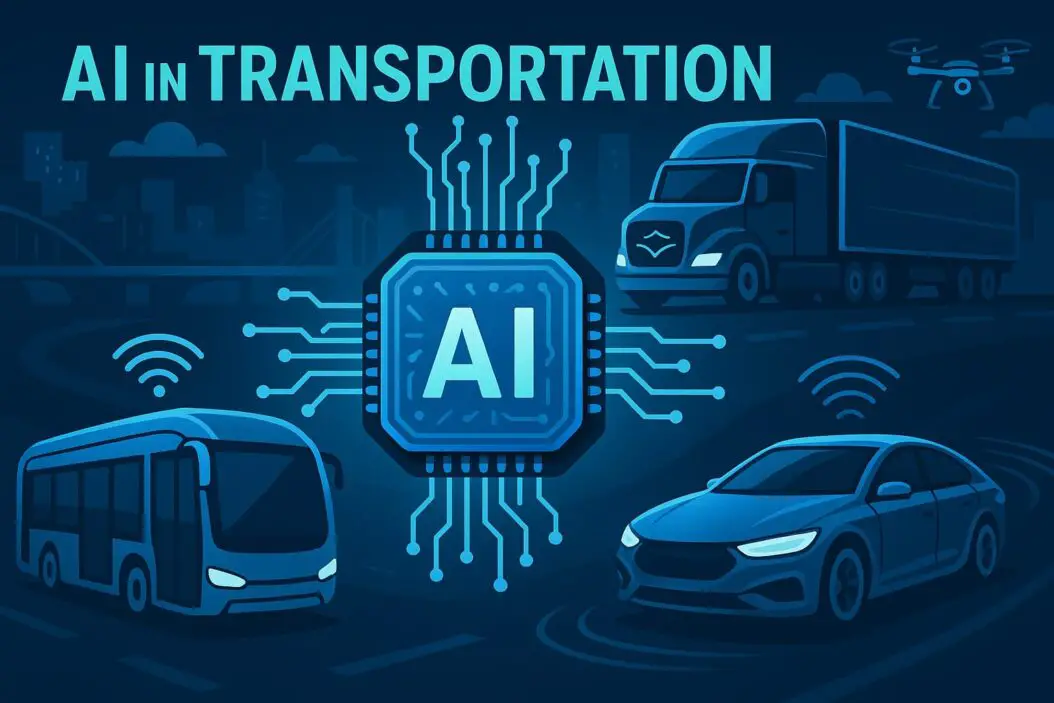
How AI Actually Works in Vehicles
Autonomous Driving Systems
Self-driving vehicles use multiple AI technologies working together:
Computer vision helps the car “see.” Cameras capture what’s around the vehicle. Neural networks trained on millions of images recognize pedestrians, traffic signs, lane markings, and obstacles.
Sensor fusion combines data from cameras, radar, and lidar (light detection and ranging). Each sensor has strengths and weaknesses. Camera excels at identifying what something is. Radar works in rain and fog. Lidar creates precise 3D maps. AI systems blend all three into one clear picture.
Decision-making algorithms choose what the car does next. Should it accelerate, brake, or turn? These AI models are trained on thousands of scenarios. They’ve learned how to respond safely in nearly every driving situation.
Path planning calculates the safest, smoothest route through traffic in real time.
Real example: Tesla’s Autopilot and Full Self-Driving systems use neural networks that have seen more than 6 billion miles of data. This helps them recognize edge cases that human drivers rarely encounter.
Predictive Maintenance
AI predicts equipment failures before they happen. Instead of waiting for something to break, maintenance teams fix it first.
How it works: Sensors on vehicles collect data about engine temperature, vibration, fuel efficiency, and dozens of other factors. Machine learning models detect subtle patterns that suggest a problem is developing.
The value: A fleet that breaks down less runs more. Companies save money on emergency repairs. Vehicles stay on the road longer.
Example: Airlines now use AI to predict which engines need maintenance. They’ve reduced unexpected breakdowns by up to 35 percent.
Traffic Flow Optimization
Cities use AI to manage traffic lights, predict congestion, and guide vehicles efficiently.
Traditional systems use timers. Green for 30 seconds, red for 45 seconds, repeat. They don’t adapt to actual traffic.
AI systems collect data from thousands of sensors and cameras. They see traffic patterns in real time. They adjust signal timing to keep traffic moving smoothly. Some cities have reduced congestion by 20 percent using these systems.
Real-World Applications Right Now
Ride-Sharing and Delivery
Companies like Uber and Lyft use AI constantly. The algorithm matches you with nearby drivers instantly. It predicts demand (surge pricing). It routes delivery vehicles to save time and fuel costs.
Delivery companies use similar logic. Amazon’s Last Mile routing AI plans efficient delivery sequences for thousands of packages. This doesn’t just help logistics companies. It reduces emissions and gets packages to you faster.
Navigation Apps
Google Maps and similar apps use AI to:
Predict travel times with accuracy within minutes, even during unexpected disruptions. Learn from millions of smartphones where people are actually driving and how fast they’re moving. Suggest routes that consider current conditions, not just distance.
Parking Solutions
Finding parking wastes time and fuel. AI-powered systems guide drivers to available spots. Computer vision counts cars entering and leaving. Machine learning predicts where spots will open up.
Reducing time spent searching reduces emissions. It makes parking less frustrating.
Transit Planning
Cities use AI to optimize bus and train schedules. It analyzes ridership data and adjusts routes and frequency based on actual demand. Some transit agencies have improved efficiency by 15 to 25 percent.
Benefits That Matter
| Benefit | Impact | Example |
|---|---|---|
| Safety | Fewer accidents and injuries | AI systems don’t get tired, distracted, or angry |
| Efficiency | Less time wasted, lower costs | Route optimization saves companies millions annually |
| Emissions | Reduced fuel consumption | Smarter routing cuts fuel use by 10 to 20 percent |
| Accessibility | Better mobility for elderly and disabled | Autonomous vehicles provide independence |
| Maintenance | Fewer unexpected breakdowns | Predictive systems prevent 35 percent of failures |
| User Experience | Faster, easier travel | Real-time information and suggestions |
The Challenges That Still Exist
Technical Challenges
Autonomous vehicles work well in ideal conditions. Rain, snow, and unusual situations still confuse the systems. A technology that works 99.5 percent of the time isn’t good enough for self-driving cars. We need 99.99 percent or better.
Cold weather particularly challenges AI vision systems. Snow covers lane markings. Ice changes how vehicles behave. Researchers are working on this, but progress is measured in years, not months.
Ethical and Legal Questions
If an autonomous vehicle must choose between hitting a pedestrian or swerving into traffic, what should it do? These edge cases raise hard questions about liability, responsibility, and values.
No perfect answer exists. Lawmakers in different countries are approaching this differently. This creates uncertainty for companies developing the technology.
Data Privacy
Efficient transportation requires data. Cameras see where people go. GPS tracks journeys. Apps collect travel patterns. How is this data protected? Who can access it? These questions remain partially unsolved.
Integration and Infrastructure
AI needs good infrastructure to work. Roads need sensors and data connections. Cities need to upgrade their systems. This requires investment and coordination that doesn’t happen overnight.
Where AI Transportation Is Heading
Near term (1 to 3 years): Expect more advanced driver assistance features in regular cars. Autonomous delivery vehicles will expand in specific areas. Ride-sharing will improve through better routing and driver matching.
Medium term (3 to 7 years): Autonomous taxis may operate in more cities, but likely in limited areas first. AI will handle more complex fleet management tasks. Public transportation will become more efficient through better scheduling and maintenance.
Longer term (7+ years): If regulation and technology align, more autonomous vehicles on roads. Integration across transportation types (cars, buses, trains) managed by single AI system. Significant reduction in accidents and emissions.
The timeline depends on regulation, technology breakthroughs, and public acceptance. No single date exists when everything changes at once.
Getting Started: What This Means for You
If you drive: Expect your next car to have better driver assistance features. Familiarize yourself with them. They reduce accidents but require you to understand their limits.
If you manage vehicles: Start exploring AI fleet management tools. They work with existing vehicles and save money immediately. You don’t need futuristic cars to benefit from AI today.
If you use rideshare or delivery: You’re already using AI transportation. Understanding how it works helps you use it better.
If you’re in transportation business: Competitive advantage goes to early adopters. Begin with predictive maintenance or route optimization. These deliver quick returns.
Key Takeaway
AI in transportation isn’t a distant future technology. It’s here, working in ride-sharing apps, traffic systems, and fleet management. The shift toward smarter transportation happens gradually through many small improvements, not one dramatic change. Understanding how AI works in transportation helps you make better decisions, whether you’re buying a vehicle, running a business, or simply trying to get somewhere faster.
Frequently Asked Questions
How safe are autonomous vehicles compared to human drivers?
Autonomous vehicles have fewer accidents in controlled conditions than human drivers. However, this comparison is complex. Human drivers have decades of real-world experience. AI systems have millions of miles logged but in limited conditions. The current evidence suggests autonomous vehicles will be safer overall, but the technology isn’t perfect yet. Safety continues improving as systems learn.
Can AI reduce transportation costs for businesses?
Yes, significantly. Route optimization typically reduces fuel costs 10 to 20 percent. Predictive maintenance prevents expensive breakdowns. Fleet utilization improves. Most businesses see return on investment within 1 to 2 years.
Will AI transportation create or eliminate jobs?
Both will happen. Some driving jobs will decline as autonomous vehicles expand. However, new jobs emerge: AI system maintenance, data analysis, vehicle fleet management, and roles we haven’t imagined yet. The transition period creates real challenges for workers, requiring training and adaptation.
What’s the biggest barrier to AI transportation adoption?
Regulation and public trust. The technology works better than regulation allows in some places. In others, public skepticism slows adoption. Infrastructure investment also matters. Cities need updated systems to support AI transportation at scale.
When will self-driving cars be everywhere?
Probably not for 10 to 15 years in most places. They’ll expand gradually in specific regions and conditions. Full adoption requires regulatory frameworks, infrastructure upgrades, and technological breakthroughs. Different countries will move at different speeds based on regulation and investment.
Additional Resources
For deeper understanding of autonomous vehicle technology and industry developments, visit the Society of Automotive Engineers for technical standards and industry insights.
For current information on AI in transportation regulation and policy, the World Economic Forum’s Center for the Fourth Industrial Revolution provides research and analysis on how AI is transforming industries including transportation.
