
Renewable resources are natural materials that replenish themselves within a human lifespan. Solar energy, wind, water, geothermal heat, and biomass all return or regenerate on their own. Unlike fossil fuels that took millions of years to form, renewable resources provide continuous energy without depleting Earth’s supplies. They’re crucial because they reduce pollution, combat climate change, and ensure energy security for future generations.
What Are Renewable Resources?
Renewable resources are materials and energy sources that nature replaces on its own. When you use them, they come back. This is fundamentally different from non-renewable resources like coal, oil, and natural gas, which take millennia to form and won’t return in our lifetime.
The sun delivers more energy to Earth in one hour than humanity uses in an entire year. Wind blows constantly across our planet. Water cycles continuously through evaporation and rain. These aren’t accidental advantages. They’re natural systems that have existed for billions of years.
A renewable resource must meet two criteria. First, it regenerates faster than humans consume it. Second, using it doesn’t significantly damage the ecosystem. Both conditions matter equally. A resource might regrow but still cause environmental harm if harvested irresponsibly.
The Five Main Types of Renewable Resources
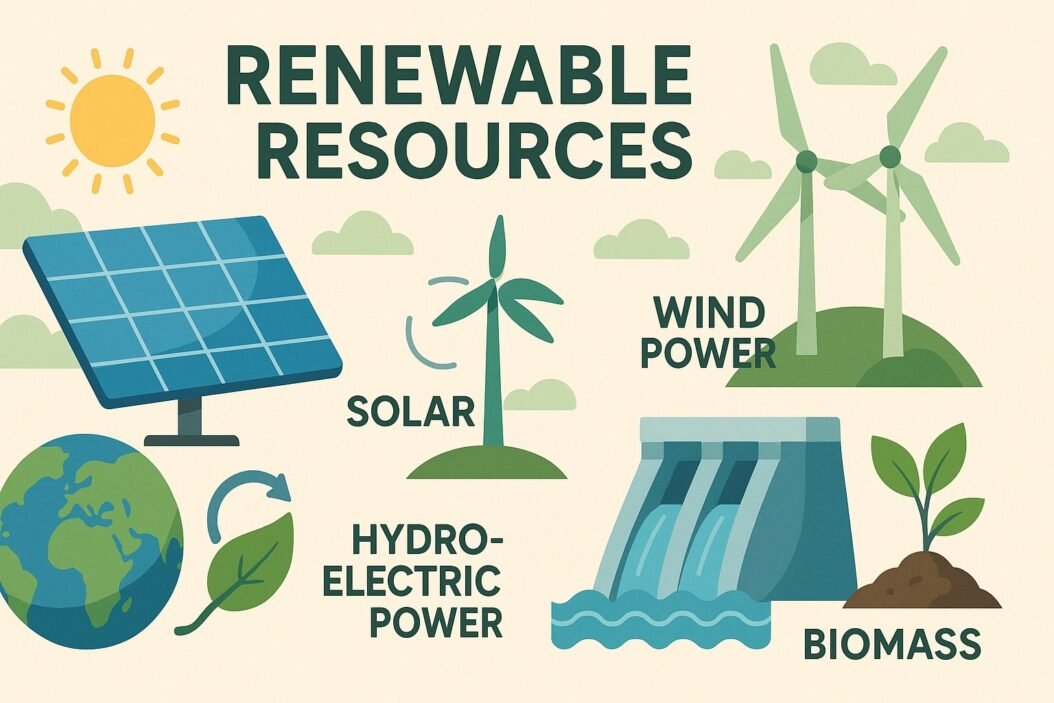
Solar Energy
Solar power comes directly from the sun’s radiation. Every second, the sun produces energy equivalent to thousands of nuclear power plants. We capture this in two main ways.
Photovoltaic panels convert sunlight directly into electricity. Silicon cells in these panels release electrons when light hits them, creating an electrical current. This happens instantly without moving parts or combustion. A typical residential solar panel generates between 250 and 400 watts of power under ideal conditions.
Solar thermal systems heat water or air directly. These are simpler than photovoltaic systems and often more efficient. In sunny climates, solar thermal systems can provide 80 percent of a household’s hot water needs annually.
Solar energy works everywhere the sun shines, but output varies by location, season, and weather. Deserts and southern regions get stronger, more consistent sunshine. Northern areas still benefit, just with lower efficiency during winter months.
Wind Energy
Wind turbines convert moving air into electricity. When wind pushes the blades, they spin a shaft connected to a generator. Modern turbines are enormous. Industrial turbines often stand 260 feet tall with blade spans exceeding 300 feet.
Wind availability depends on geography. Coastal areas, plains, and high elevations experience stronger, more consistent winds. Mountain passes and open water especially concentrate wind power. Installations in these locations produce significantly more electricity than turbines in sheltered valleys.
A single utility-scale wind turbine can generate 2 to 10 megawatts of power, enough for 600 to 3000 homes. Wind farms cluster multiple turbines to maximize output. The largest wind farms generate as much electricity as small coal plants.
Wind energy scales from individual small turbines powering remote locations to massive offshore wind farms serving entire regions. The technology is proven, cost-effective, and expanding rapidly worldwide.
Hydroelectric Power
Water moving downhill creates powerful, controllable energy. Dams hold water at elevation, then release it through turbines. The falling water’s weight and speed spin the turbine blades, which drive generators producing electricity.
Hydropower is remarkably reliable. Unlike solar and wind, which depend on weather, hydroelectric plants generate power consistently as long as water flows. Many facilities operate at 90 percent capacity factors or higher, meaning they produce close to maximum output most of the time.
Pumped-storage hydroelectricity works differently. During off-peak hours, excess electricity pumps water uphill into a reservoir. When demand increases, water flows downhill through turbines. This system stores energy efficiently for 24 hours or longer.
Hydropower provides about 16 percent of global electricity. Countries with significant elevation changes and rainfall, like Norway, Canada, and Brazil, generate much of their power this way. The technology is mature, efficient, and often lasts over 100 years.
Geothermal Energy
Earth’s interior stays hot from radioactive decay in the planet’s core and mantle. This heat reaches usable temperatures in certain locations, particularly near tectonic plate boundaries and volcanic regions.
Geothermal plants drill deep wells to access heated water and steam. This steam drives turbines connected to generators. Some facilities inject water into hot rock formations, which heat it and send steam back to the surface. The process repeats continuously.
Geothermal energy provides baseload power. It runs 24/7 regardless of weather or time of day. Capacity factors often exceed 70 percent, higher than most renewable sources. This reliability makes geothermal valuable for grid stability.
Geothermal heating and cooling systems work differently. A closed-loop system circulates fluid through underground pipes. The earth acts as a massive thermal battery, maintaining relatively constant temperatures year-round. These systems reduce heating and cooling energy requirements by 25 to 50 percent compared to conventional HVAC systems.
Geothermal resources aren’t equally distributed. Iceland gets 30 percent of its electricity from geothermal sources. New Zealand, the Philippines, and parts of the western United States also benefit from abundant geothermal resources. Other regions have limited access.
Biomass and Biofuels
Biomass means energy from living or recently living organisms. Wood, agricultural waste, food processing byproducts, and dedicated energy crops all qualify. When these materials burn, they release energy that powered their growth.
Biomass is carbon-neutral when sustainably harvested. A tree absorbs carbon dioxide as it grows, storing it in wood. Burning that wood releases the same carbon. If a new tree grows to replace it, the cycle balances. This differs fundamentally from fossil fuels, which release carbon that was buried for millions of years.
Biofuels include bioethanol from corn or sugarcane and biodiesel from vegetable oils. These fuel existing vehicles with minimal modifications. Brazil leads biofuel production, using sugarcane waste to generate significant portions of its energy needs.
Biomass requires careful management. Unsustainable harvesting depletes forests and doesn’t allow time for regrowth. The most responsible biomass uses agricultural and industrial waste rather than cutting trees specifically for fuel. This approach maximizes environmental benefit while minimizing land-use changes.
Why Renewable Resources Matter Right Now
Climate change fundamentally depends on energy sources. Fossil fuels release carbon dioxide accumulated over millions of years, trapping heat in the atmosphere. Renewable energy produces electricity without greenhouse gas emissions.
The numbers illustrate the urgency. In 2024, fossil fuels still generate roughly 80 percent of global energy. Transitioning to renewables represents humanity’s primary tool for limiting warming to manageable levels. Every percentage point of fossil fuel displacement matters.
Air pollution kills approximately 8 million people annually. Coal, natural gas, and oil combustion produce nitrogen oxides, sulfur dioxide, and particulate matter. These pollutants cause respiratory diseases, heart problems, and premature death. Renewable energy eliminates these emissions entirely.
Energy independence strengthens national security. Countries dependent on fossil fuel imports face vulnerability to supply disruptions and price manipulation. Renewable resources, available locally in most regions, provide stability and reduce geopolitical risks.
Economic arguments support the transition too. Renewable energy creates more jobs per dollar invested than fossil fuels. Solar and wind installation, maintenance, and manufacturing employ hundreds of thousands globally. These jobs can’t be outsourced, benefiting local communities.
How Renewable Energy Systems Actually Work Together
No single renewable resource solves all energy needs. The most resilient systems combine multiple sources.
Solar produces peak power during midday when usage often peaks. This timing advantage makes solar integration easier. Wind patterns differ by geography and season but often produce at night and during winter when solar is weak. Combining both sources smooths generation fluctuations.
Hydroelectric power and battery storage balance unpredictable renewables. When solar and wind production dips below demand, stored water or charged batteries fill the gap. This combination creates reliable, renewable-powered grids.
Denmark generates about 80 percent of electricity from wind. Norway supplies hydropower when wind drops. Together they maintain grid stability with minimal fossil fuel use. This model demonstrates how regions benefit from diverse renewable sources and interconnection.
Challenges and Honest Limitations
Renewable energy isn’t perfect. Understanding real limitations helps evaluate claims and expectations.
Intermittency remains the primary challenge. The sun doesn’t shine at night. Wind doesn’t blow constantly everywhere. Solar and wind alone cannot maintain modern grids without storage or backup. Acknowledging this reality guides better infrastructure planning.
Energy storage technology is improving rapidly. Battery costs have dropped 90 percent since 2010. New storage technologies including compressed air, thermal storage, and mechanical systems expand options. But storage capacity remains insufficient for weeks or months of continuous cloudy, calm weather in many regions.
Land requirements deserve consideration. Renewable installations occupy more surface area than nuclear or fossil fuel plants per unit of energy generated. A coal plant occupies much less land than equivalent solar capacity. However, solar farms can coexist with agriculture through thoughtful design, and wind turbines share land with farming.
Manufacturing renewable equipment requires energy and materials. Solar panels need silicon, glass, and metals. Wind turbines require steel and composite materials. The environmental impact of production matters, though the energy payback typically occurs within 1 to 4 years of operation.
Initial installation costs remain high, though total lifecycle costs increasingly favor renewables. A solar installation costs less over 25 years than equivalent electricity from grid sources in most developed regions, even before accounting for pollution and climate costs.
Grid integration challenges are real but solvable. Existing infrastructure designed for centralized fossil fuel plants requires modification to handle distributed renewable generation. Smart grid technology, demand response systems, and improved forecasting address these issues.
Renewable Resources by Region: What Works Where
Geographic differences dramatically affect renewable viability.
Tropical and Subtropical Regions: Solar and hydropower dominate. Consistent sunshine and abundant rainfall create ideal conditions for both. Brazil, Indonesia, and sub-Saharan Africa possess tremendous renewable potential.
Temperate Coastal Areas: Wind and hydropower excel. Consistent ocean breezes and elevation changes from mountains create strong resources. Northern Europe, the Pacific Northwest, and similar regions show high wind and hydropower capacity.
Arid and Semi-Arid Regions: Solar power dominates. The Sahara, Australian outback, and southwestern United States receive intense, consistent sunlight. These areas contain extraordinary solar potential, though population concentration often lies elsewhere.
Volcanic Regions: Geothermal power provides reliable basepower. Iceland, New Zealand, the Philippines, and parts of the western United States benefit enormously. Geothermal resources are geographically limited but incomparably valuable where present.
Agricultural Regions: Biomass and biofuels integrate with farming. Waste products from agriculture and forestry provide fuel. This approach adds value to existing agricultural systems.
The Economics of Renewable Energy
Renewable energy has become the cheapest electricity source in most markets. Solar photovoltaic costs have dropped 90 percent since 2010. Wind electricity costs have fallen 70 percent. Both trends continue.
Levelized cost of electricity (LCOE) compares total lifetime costs against total electricity generation. In 2024, solar and onshore wind consistently beat coal and natural gas on pure LCOE in favorable locations. Adding climate and health costs makes renewables overwhelmingly superior economically.
Job creation through renewable energy significantly exceeds fossil fuel employment. Installing 1 megawatt of solar generates roughly 15 labor hours of work. The same megawatt of coal generates less than 3 labor hours. Maintenance jobs in renewable energy are distributed locally, benefiting communities.
Grid costs for renewable integration exist but are manageable. Studies show integrating 50 percent renewable electricity requires 1 to 5 percent additional system costs depending on geography and existing infrastructure. This remains far cheaper than climate change impacts.
Making the Transition Practical
Individual and organizational action accelerates renewable adoption.
Residential Options: Solar panels for homes reduce electricity bills and provide energy independence. Battery storage increases resilience. Heat pumps powered by renewable electricity replace gas furnaces. These changes reduce carbon footprints by 50 to 80 percent.
Business Implementation: Companies increasingly power operations with renewable energy. Purchasing renewable energy credits supports new installations. On-site solar and wind generation reduce operating costs long-term.
Community Projects: Local renewable cooperatives and municipal utilities develop renewable projects serving entire communities. Shared solar benefits residents without rooftop space. Community wind projects distribute benefits broadly.
Policy Support: Supporting policies accelerating renewable adoption yields enormous benefits. Tax credits for installations reduce upfront costs. Net metering policies allow homeowners to sell excess solar electricity back to the grid. Renewable energy standards mandate increasing renewable percentages over time.
Career Opportunities: The renewable energy sector creates skilled, well-paying jobs. Solar installation, wind turbine maintenance, battery system design, and grid integration engineering represent growing fields. Educational programs at all levels support workforce development.
Renewable Energy Sources at a Glance
| Source | Capacity Factor | Lifespan | Cost per MWh | Best Use |
|---|---|---|---|---|
| Solar PV | 15-25% | 25-30 years | $30-60 | Distributed, daytime peak |
| Wind (onshore) | 35-45% | 20-25 years | $30-50 | Regional generation |
| Hydroelectric | 40-90% | 50-100 years | $50-100 | Baseload, storage |
| Geothermal | 70-90% | 50+ years | $60-100 | Baseload where available |
| Biomass | 50-80% | 20-40 years | $60-120 | Regional, waste utilization |
Capacity factor shows average output versus maximum capacity. Higher capacity factors mean more consistent generation. Costs reflect current market prices and vary by location and project specifics.
Summary
Renewable resources represent Earth’s primary sustainable energy solution. Solar, wind, water, geothermal, and biomass together can power modern civilization without fossil fuels. Each has distinct advantages, limitations, and geographic applicability.
The transition won’t happen overnight. Existing infrastructure, established systems, and historical investment in fossil fuels create real barriers. But economic forces increasingly favor renewables. As costs continue falling and climate impacts worsen, the transition accelerates.
Individual choices compound into significant change. Supporting renewable energy through personal decisions, organizational participation, and policy advocacy creates momentum. The technology exists. The economics favor it. What remains is implementation at scale.
Renewable resources aren’t a distant future concept. They’re available today, increasingly affordable, and rapidly expanding globally. Understanding them empowers better decisions about energy, community involvement, and future planning.
Frequently Asked Questions
Can renewable energy power everything we currently use?
Yes, in principle. Research from multiple institutions demonstrates that 100 percent renewable electricity is technically and economically feasible. The challenge is transitioning existing infrastructure and managing storage for seasonal variations, not fundamental capability limitations.
Are renewable energy installations recyclable?
Mostly, yes. Solar panels are 95 percent recyclable by weight. Wind turbine blades present challenges but recycling processes are developing. Recycling recovers valuable materials and reduces waste, though historically most installations have been operational rather than at end-of-life.
Does renewable energy work during winter and cloudy weather?
Absolutely. Wind often increases during winter and cloudy periods. Hydroelectric and geothermal generation continue regardless of weather. Hybrid systems combining multiple renewable sources handle seasonal variations. Battery and other storage technologies bridge short-term gaps.
How much land do renewable installations require?
Specific numbers depend on technology and location. Solar farms typically need 4 to 8 acres per megawatt. Wind farms require less actual land due to spacing between turbines, with most area remaining usable for agriculture. Both use far less land per unit energy than biofuel crops or coal mining operations when total lifecycle impact is considered.
What happens to old solar panels and wind turbines?
Modern panels last 25 to 30 years before degradation becomes problematic. End-of-life options include recycling for glass, silicon, and metals; remanufacturing for second-life use in lower-power applications; or safe disposal. Wind turbine blades are increasingly recycled or repurposed. Establishing robust circular economy systems for renewable equipment represents an ongoing priority.
Additional Resources
For deeper understanding of renewable energy integration and policy, explore the International Renewable Energy Agency’s research at https://www.irena.org/ for comprehensive global data and projections.
Understanding grid modernization and storage solutions is essential for appreciating renewable feasibility at scale. The National Renewable Energy Laboratory (NREL) provides technical resources at https://www.nrel.gov/, including detailed research on grid integration challenges and solutions.

- How to Check Samsung Warranty in 2026: Complete Step-by-Step Guide - April 3, 2026
- How to Access Computer Configuration Settings in Windows 11/10 - April 3, 2026
- How to Check ASUS Warranty Status in 2026 (Step-by-Step) - April 3, 2026