
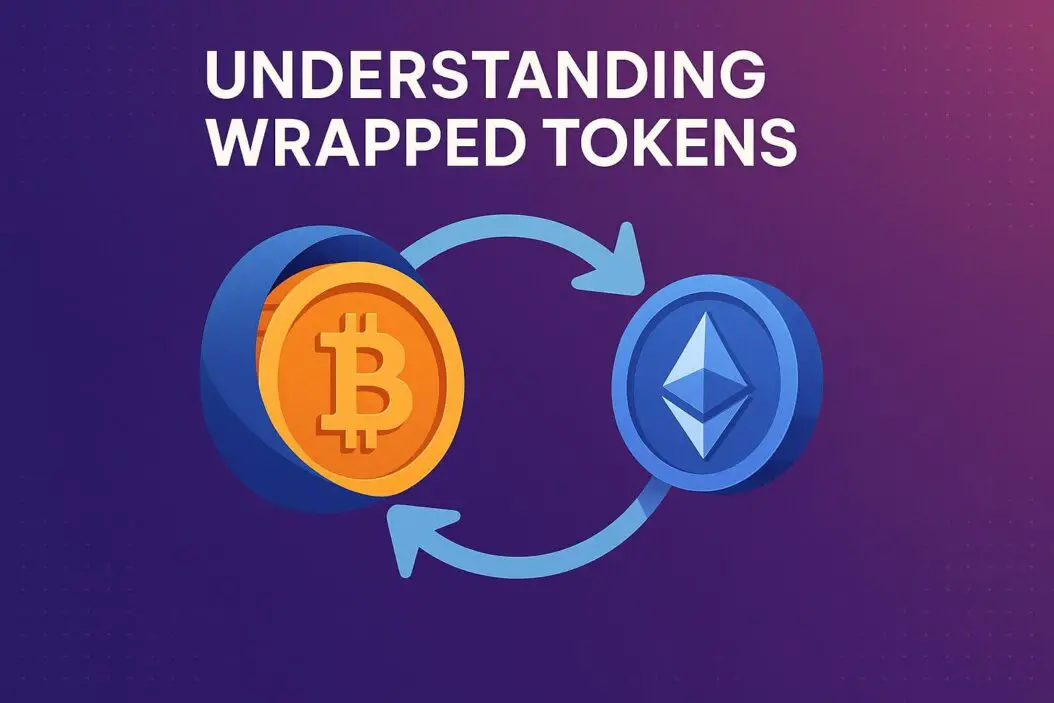
A wrapped token is a cryptocurrency that represents another cryptocurrency locked in a smart contract. Think of it like a receipt. When you deposit Bitcoin into a vault, you receive a digital token on a different blockchain that proves you own that Bitcoin. That receipt token is the wrapped token.
The core purpose is simple: it lets you use one cryptocurrency on a blockchain where it doesn’t naturally exist.
For example, Bitcoin lives on the Bitcoin blockchain. But the Ethereum blockchain doesn’t natively understand Bitcoin. Wrapped Bitcoin (WBTC) solves this. It’s an Ethereum token that represents real Bitcoin held elsewhere. You can now use Bitcoin’s value on Ethereum’s network.
This matters because blockchains don’t talk to each other easily. Wrapped tokens bridge that gap.
Why Wrapped Tokens Exist
Blockchains operate independently. Bitcoin can’t directly move to Ethereum or Solana. They use different coding systems and security models. Wrapped tokens were created to solve a real problem: enabling cross-blockchain liquidity.
Before wrapped tokens, if you wanted to trade Bitcoin on an Ethereum-based platform, you were stuck. You couldn’t do it directly. Wrapped tokens changed that.
They enable several key use cases:
Developers can build applications that use multiple cryptocurrencies on a single blockchain. Traders can access assets across networks without leaving their preferred platform. DeFi protocols can offer more trading pairs and liquidity options. Users maintain exposure to assets while accessing other blockchain features they need.
Wrapped tokens grew essential to DeFi (decentralized finance). They unlock billions in liquidity that would otherwise sit unused.
How Wrapped Tokens Actually Work
The mechanism is straightforward but important to understand.
Step 1: Deposit Your Original Asset
You send your Bitcoin (or other asset) to a custodian. This custodian is a person or organization that holds your asset safely. They verify you’ve genuinely sent the funds.
Step 2: Smart Contract Creates Wrapped Token
Once the custodian confirms receipt, a smart contract automatically creates a corresponding amount of wrapped tokens on the target blockchain. If you deposited 1 Bitcoin, you receive 1 WBTC.
Step 3: You Own and Control the Wrapped Token
The wrapped token now lives in your wallet. You can trade it, send it, or use it in applications. It’s a real, functioning token on its blockchain.
Step 4: Unwrapping (Converting Back)
When you want to recover your original Bitcoin, you send your wrapped tokens to the smart contract. The contract destroys those wrapped tokens and instructs the custodian to release your original Bitcoin back to your wallet.
The entire process relies on trust. You trust that the custodian is honest and won’t disappear with your funds. You trust that the smart contract works correctly.
Common Wrapped Tokens and Their Uses
| Wrapped Token | Represents | Main Blockchain | Use Case |
|---|---|---|---|
| WBTC | Bitcoin | Ethereum | DeFi trading, lending, liquidity pools |
| WETH | Ethereum | Other blockchains | Cross-chain swaps, diverse DeFi access |
| wSOL | Solana | Other chains | Accessing Solana ecosystem assets elsewhere |
| wxAVAX | Avalanche | Ethereum | Avalanche asset liquidity on Ethereum |
The most common wrapped token is WBTC. Billions in Bitcoin value exist as WBTC on Ethereum. This enables Bitcoin holders to participate in Ethereum’s DeFi ecosystem without selling their Bitcoin.
The Technical Process Explained Simply
When you wrap a token, several things happen behind the scenes.
First, a bridge protocol coordinates between blockchains. This protocol manages the custodial wallet holding your real assets. It also manages the smart contract creating wrapped tokens.
You connect your wallet and authorize the transaction. You send your assets to a specific address controlled by the bridge. The bridge’s nodes monitor this deposit. They verify it’s legitimate and hasn’t been reversed.
Once confirmed (usually after several blockchain confirmations for security), the smart contract on the target blockchain mints wrapped tokens. Minting means creating new tokens out of thin air, but only because real assets back them.
You instantly receive your wrapped tokens. The entire process typically takes 5 to 30 minutes depending on network congestion.
Unwrapping reverses this. You approve the smart contract to burn (destroy) your wrapped tokens. The custodian sees this burn event and releases your original assets back to you.
Wrapped Tokens vs. Stablecoins: Key Differences
Many people confuse wrapped tokens with stablecoins. They’re different.
A stablecoin (like USDC or Tether) aims to maintain a stable price, usually $1. Stablecoins often represent fiat money held in bank accounts. They’re designed for price stability.
A wrapped token represents another cryptocurrency locked away. Its price fluctuates with the underlying asset. If Bitcoin rises 10%, WBTC rises 10%. There’s no price stability goal.
Wrapped tokens are about access and cross-chain functionality. Stablecoins are about price predictability and easier trading. They solve different problems.
Risks You Need to Know
Wrapped tokens aren’t risk-free. Understanding these risks helps you decide if they’re right for you.
Smart Contract Risk
Smart contracts are code. Code can have bugs. If a wrapped token’s smart contract has a vulnerability, funds could be lost. This is rare with established projects like WBTC, but newer wrapped tokens carry higher risk. Always check if the smart contract has been audited by reputable security firms.
Custodial Risk
Wrapped tokens require someone to hold your real assets. What if that custodian disappears or acts dishonestly? Your wrapped tokens become worthless. This is why established custodians like Coinbase or Kraken (which manage WBTC) are preferred. They have financial incentives to remain trustworthy and regulatory oversight.
Liquidity Risk
If wrapped tokens aren’t actively traded, you might struggle to convert them back. Less popular wrapped tokens can have low liquidity. When liquidity is low, you might get poor exchange rates when selling. Research trading volume before choosing a wrapped token.
Bridge Hacks
The technology connecting blockchains is complex. Bridges have been hacked. These attacks have sometimes resulted in hundreds of millions in losses. Using established bridges with strong security track records reduces this risk.
How to Use Wrapped Tokens Safely
If you decide wrapped tokens fit your strategy, follow these practices.
Start small. Test your process with a tiny amount. Understand the fees and time required. Make sure you can successfully wrap and unwrap before moving larger amounts.
Use established options. WBTC, WETH, and tokens from major bridges have been tested extensively. They’re safer than new, untested wrapped tokens.
Check the custodian. Know who holds your real assets. Are they regulated? Do they have insurance? Have they been audited?
Review smart contract audits. Look for security audits from firms like OpenZeppelin or Consensys Diligence. Published audits significantly reduce risk.
Verify the bridge interface. Only use official websites. Scammers create fake interfaces that steal your funds. Bookmark official URLs and use them exclusively.
Understand the fees. Wrapping and unwrapping costs money. There are minting fees, burning fees, and network transaction fees. These vary by platform. Some bridges are cheaper than others.
Keep private keys secure. Your wrapped tokens are only as safe as your wallet. Use hardware wallets for significant amounts. Never share your private keys.
When Wrapped Tokens Make Sense
Wrapped tokens are most useful in specific scenarios.
You’re a Bitcoin holder wanting to access Ethereum DeFi without selling Bitcoin. Wrapping Bitcoin lets you earn yield on lending platforms or provide liquidity in trading pairs while keeping Bitcoin exposure.
You’re an Ethereum user wanting to trade Solana tokens. Instead of moving to Solana, you can trade wrapped Solana on Ethereum while Ethereum gas is cheaper than Solana fees.
You’re building a protocol that needs liquidity from multiple blockchains. Wrapped tokens let you tap into multi-billion-dollar liquidity pools.
You’re hedging risk across blockchains. Some traders maintain positions on multiple chains using wrapped tokens to access different yield opportunities.
Wrapped Tokens vs. Direct Swaps
Another option for accessing different assets is using decentralized exchanges. Instead of wrapping, you can directly trade your Bitcoin for Ethereum on a DEX (decentralized exchange).
But wrapped tokens offer advantages. They let you hold the asset long-term on another blockchain. They enable complex DeFi strategies. They let you access applications specific to that blockchain.
Direct swaps are simpler if you’re just trading. Wrapped tokens make more sense if you plan to use the asset within another ecosystem for weeks or months.
The Future of Wrapped Tokens
Wrapped tokens are likely to evolve. New bridge technologies are being developed that are faster and more secure. Some projects are experimenting with trustless wrapping, where smart contracts rather than human custodians manage the assets.
However, wrapped tokens will probably remain important for years. Unless blockchains develop better native cross-chain communication (which is technically challenging), wrapped tokens fill a critical need.
Understanding wrapped tokens now positions you to use emerging financial tools. Cross-chain liquidity is becoming fundamental to crypto finance.
Wrapped Tokens in Real-Life Examples
Scenario 1: The Bitcoin Farmer
Sarah owns 10 Bitcoin. She wants to earn passive income. Ethereum DeFi protocols offer 5% yield on collateral. To access this, she converts 2 Bitcoin to 2 WBTC on Ethereum. She deposits this WBTC as collateral in a lending platform. Now she earns 5% yield while keeping Bitcoin price exposure. If Bitcoin rises 20%, her collateral value rises 20% too. She still owns the Bitcoin value; she’s just using it differently.
Scenario 2: The Cross-Chain Trader
Marcus trades Solana but prefers Ethereum’s interfaces. Instead of moving his Solana to an exchange (costly and complex), he wraps it to Ethereum as wSOL. He can now trade it on Ethereum DEXes with lower fees and faster execution. When done, he unwraps back to native Solana.
Scenario 3: The Protocol Builder
A new DeFi protocol launches on Ethereum but wants to offer trading pairs for Bitcoin, Solana, and Avalanche. Instead of building complex custom bridges, they accept wrapped versions of these assets. Users who hold these assets on other chains can wrap them and trade within the protocol. Suddenly the protocol has access to billions in liquidity.
Summary: Key Takeaways
Wrapped tokens are bridges between blockchains. They represent real assets locked in custody, enabling cross-chain access and liquidity.
They work through custodians holding real assets while smart contracts mint corresponding tokens on target blockchains. This enables Bitcoin in Ethereum DeFi, Ethereum tokens in Solana, and countless other cross-chain applications.
Wrapped tokens aren’t risk-free. They depend on custodian honesty, smart contract security, bridge integrity, and adequate liquidity. But millions use them successfully every day.
They make sense when you want long-term exposure to an asset within a different blockchain’s ecosystem. Use established wrapped tokens, verify custodians, check security audits, and start small.
The technology continues improving. Better bridges and potentially trustless wrapping systems are in development. But wrapped tokens will remain central to multi-chain crypto for the foreseeable future.
Frequently Asked Questions
Can I lose money using wrapped tokens?
Yes, though typically through mistakes rather than wrapped tokens themselves being problematic. Smart contract bugs are rare in established wrapped tokens but possible in new ones. Using established wrapped tokens like WBTC from reputable custodians significantly reduces this risk.
How long does wrapping take?
Usually 5 to 30 minutes depending on which blockchain’s network congestion you’re experiencing. The underlying asset deposit must be confirmed. Then the smart contract mints wrapped tokens. This process varies by bridge protocol and current network activity.
Are wrapped tokens as secure as the original asset?
They’re as secure as their custodian and smart contract. If both are trustworthy and audited, they’re quite secure. But they add layers of complexity compared to holding the original asset directly. There’s always some additional risk compared to direct ownership.
What happens if I accidentally send wrapped tokens to the wrong address?
Like any cryptocurrency transaction, it’s likely permanent. Always double-check addresses before sending. Use small test amounts first if you’re new to the process.
Can the value of a wrapped token differ from its underlying asset?
Theoretically no, but minor differences can occur temporarily due to trading, fees, or low liquidity. If significant differences appear, this usually indicates problems with the wrapped token’s legitimacy or backing. Stick to liquid, well-established wrapped tokens where prices track their underlying assets closely.
Additional Resources
For deeper understanding of DeFi and cross-chain technology, the Ethereum Foundation provides comprehensive technical documentation: https://ethereum.org/en/developers/
To understand more about bridge security and risks, the StarkWare blog regularly publishes research on cross-chain protocols and their vulnerabilities: https://starkware.co/blog/
